

Skip to content
IoT Engineer

Portfolio

Projects in detail

BarIoT

HBKU, Doha, Qatar2022 - Present
Bariot Logo
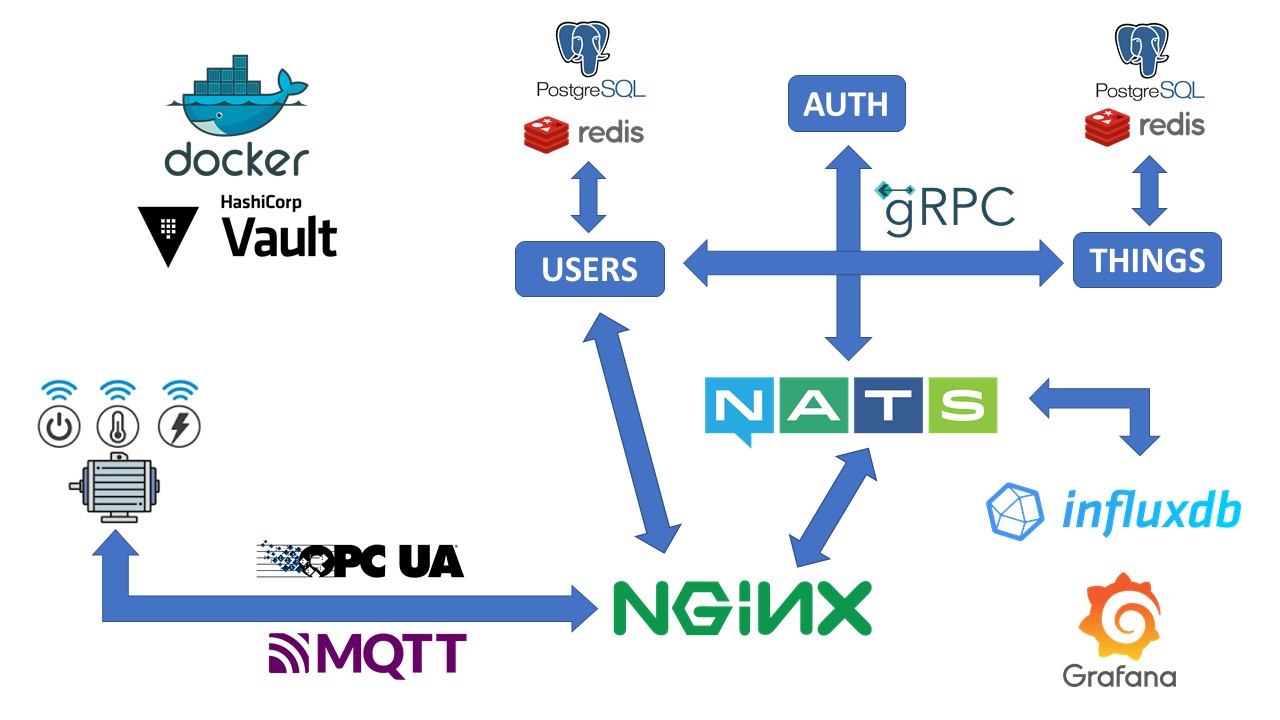
Bariot Architecture
Bariot Logo
Bariot Tools

Bariot is an IoT / IIoT (Industrial Internet of Things) platform designed with modern standards of security, scalability, performance and DevOps practices. Bariot is used to create a simple and scalable solutions to connect devices, store data and offers visualizations tools. It is therefore a complete tool to quickly bring these online features to communication enabled devices at any scale.

It is developed mainly in Go with docker and use a wide range of industry standard technologies, such as MQTT, PostgreSQL, InfluxDB, etc... This project is inspired from the beautiful architecture of Mainflux. It gave me a deep understanding of most of the technologies involved in IoT cloud platforms (not only)
Key Points:

  • Microservices with Go and Docker
  • Distributed system with message queuing
  • Fast and Horizontally scalable
  • Secure encryption and secrets management

Project on GitHub

More details
Technologies used in Bariot:
  • Transport: MQTT
  • Authentication/Authorization: JWT
  • USER, THINGS storage: PostgreSQL
  • THINGS DATA storage: InfluxDB
  • Services intercommunication: gRpc
  • Services messaging: Nats
Technologies being added:
  • Transport: OPC-UA
  • Data presentation: Grafana
  • Reverse proxy: Nginx
  • Secret storage/management: Vault
  • Caching: Redis
  • CI/CD: GitLab

Bariot is opinionated, in the sense that storage and communications technologies are predefined (for now)
  • Cloud & Backend
  • IoT
  • IIoT
  • Online platform
  • Microservices
  • Docker
  • Go
LoRaWAN Health V2

HBKU, Doha, Qatar2021 - Present
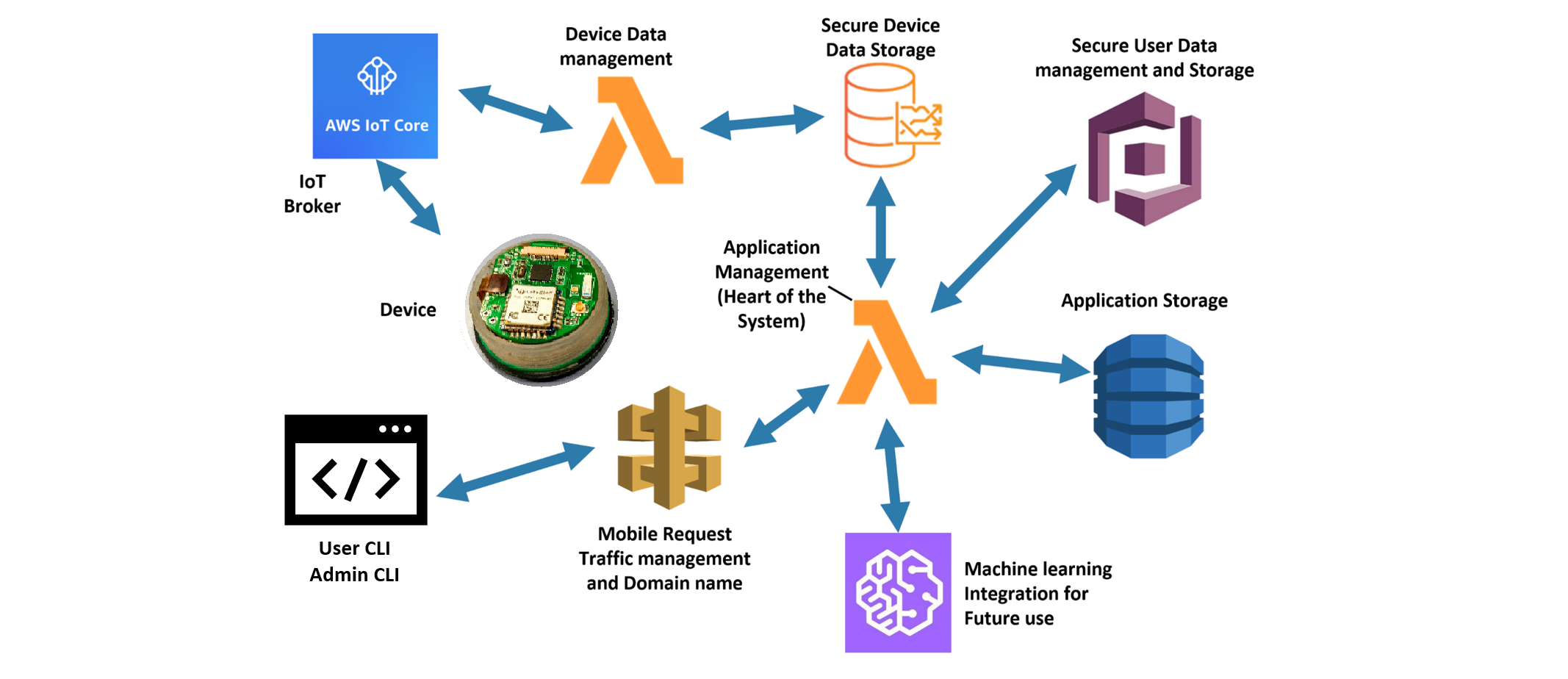
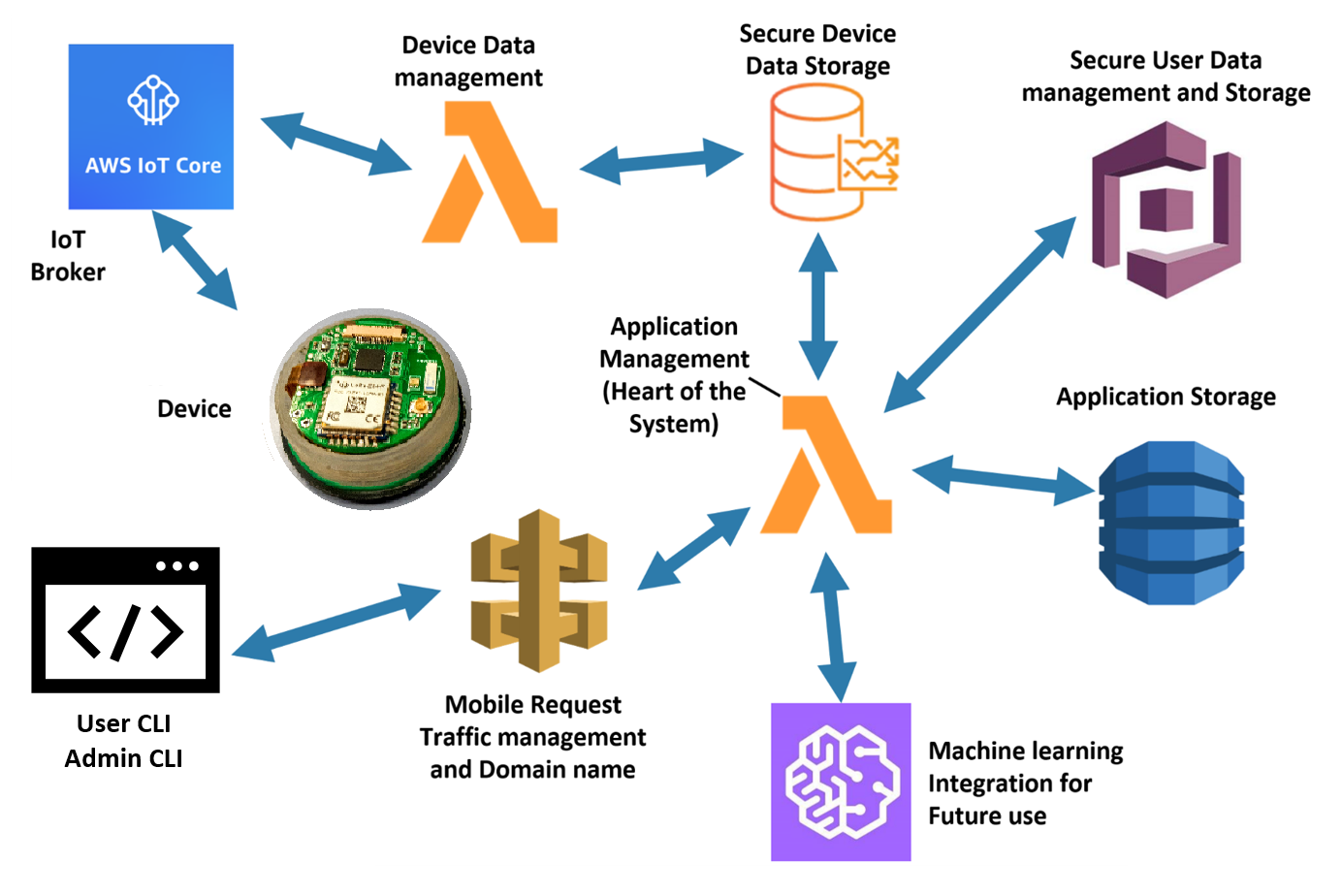
LoRaWAN Health V2 AWS cloud architecture
Circuit Garment
Circuit Break out
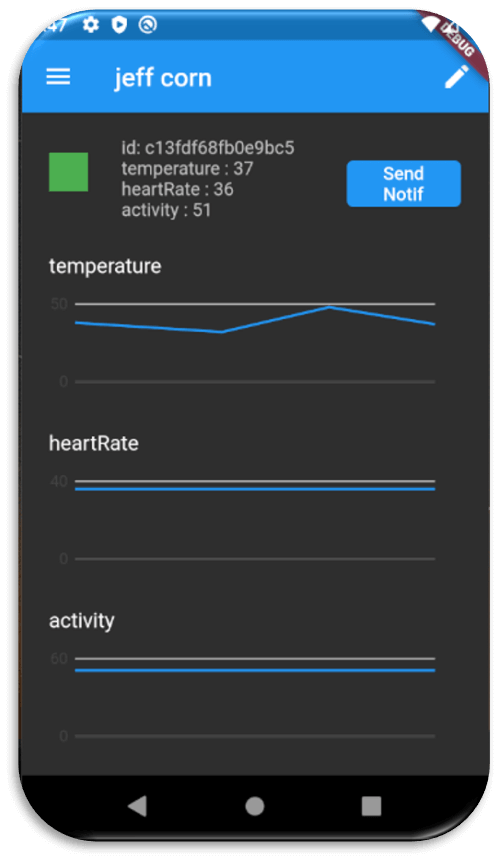
Mobile_app
AWS CDK
Debugging
LoRaWAN Health V2 AWS cloud architecture
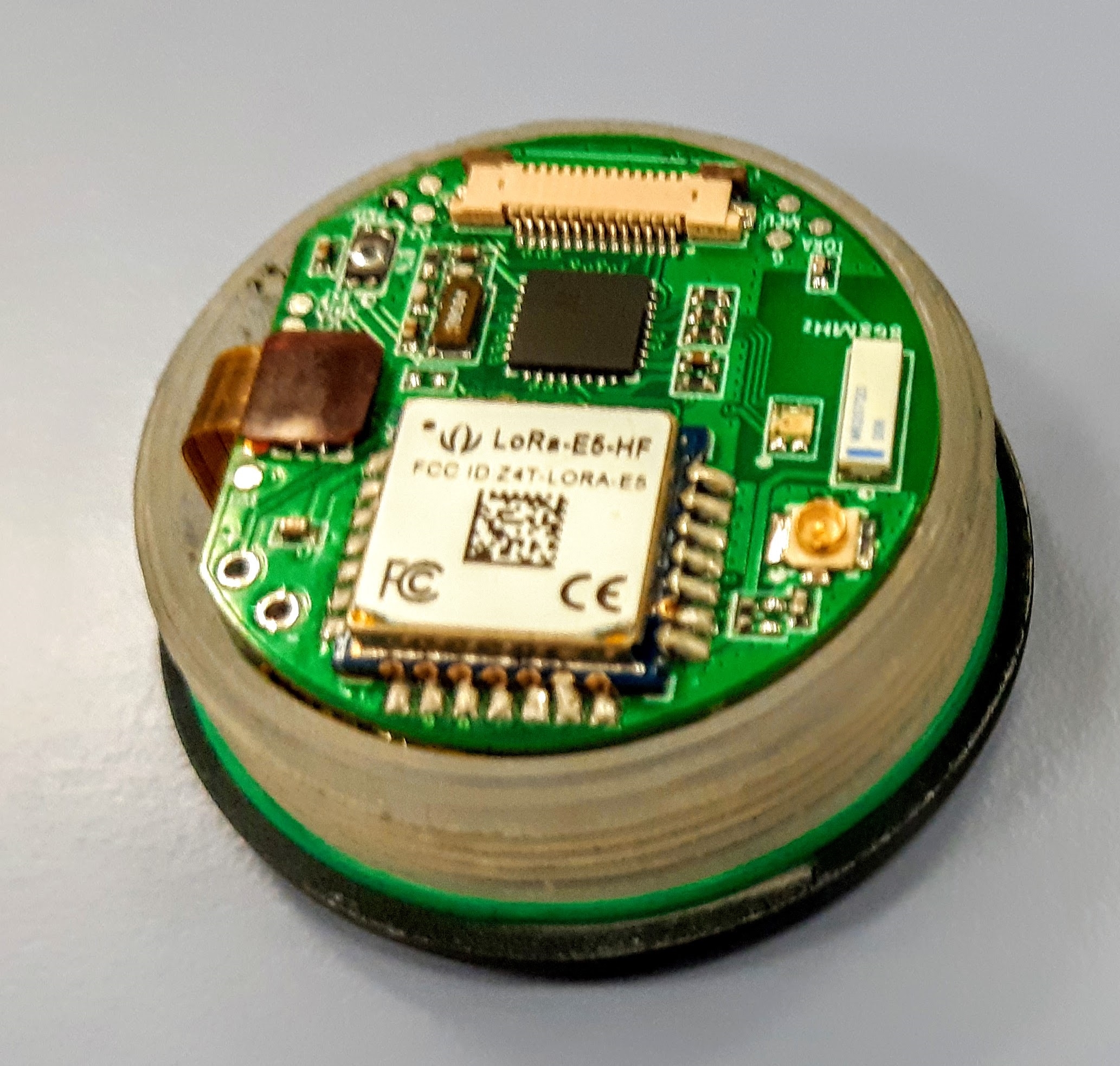
Circuit garment
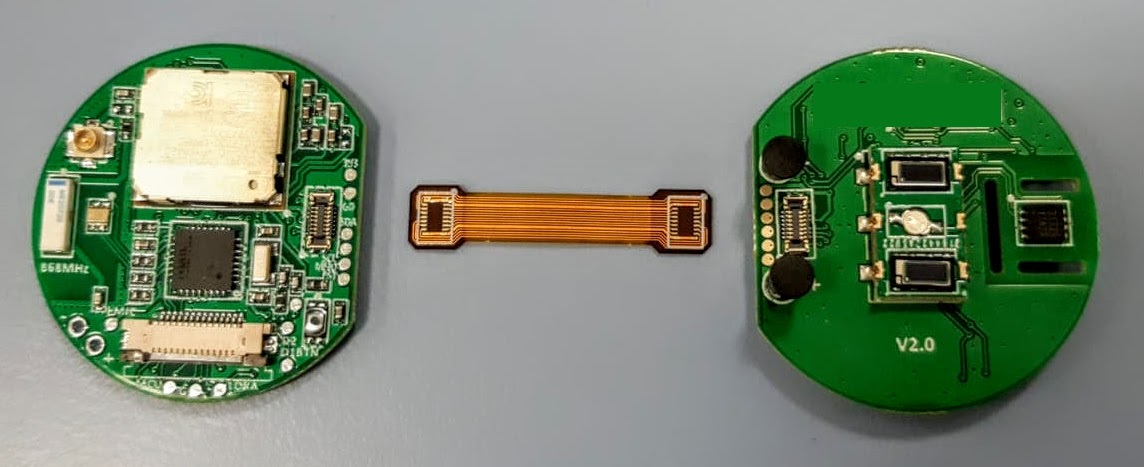
Circuit

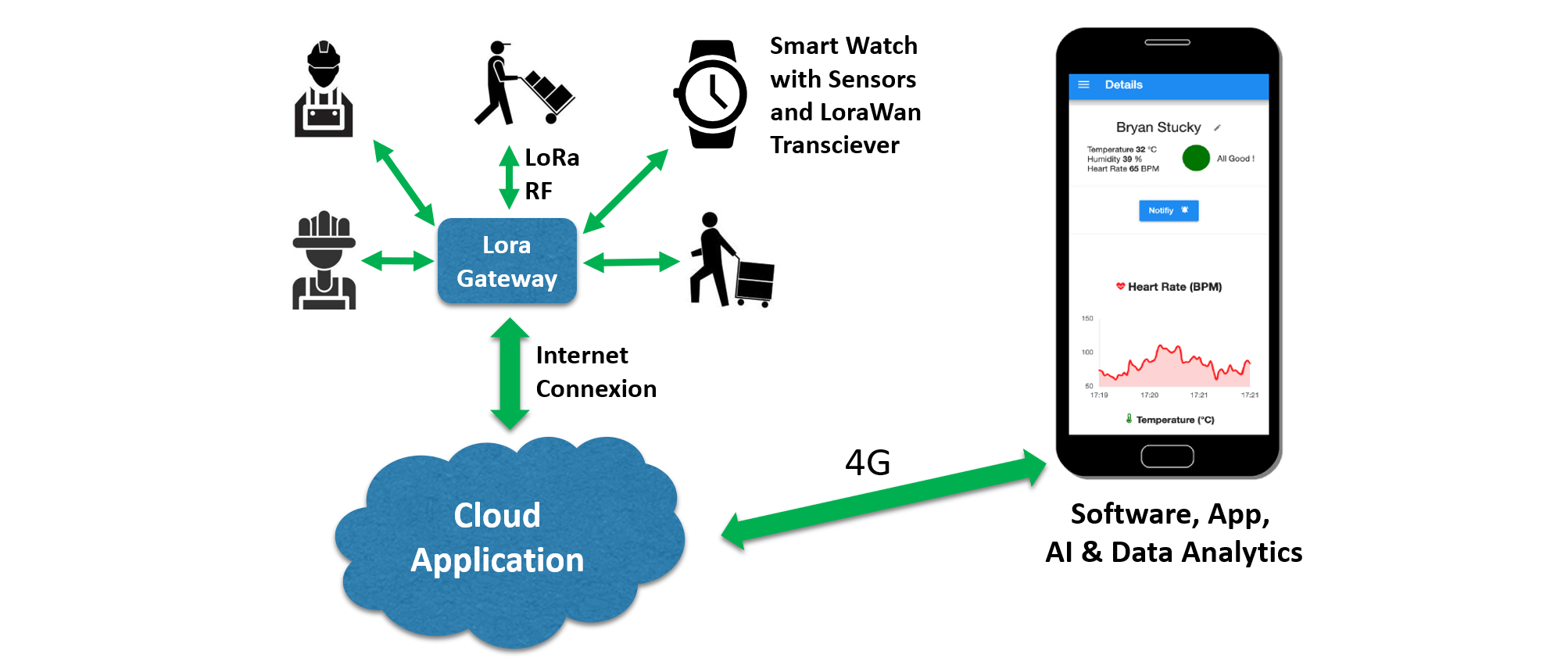
The overall goal being to monitor the health status of hundreds of persons at a time within a perimeter of few hundred meters. The typical scenario is for outdoor groups , possibly elderly persons in retirement houses, outdoor workers under a tough weather, health-fragile children in schools, etc...

It is a Fullstack IoT system to gather data from the wearer of our LoRaWAN enabled custom wristwatches.

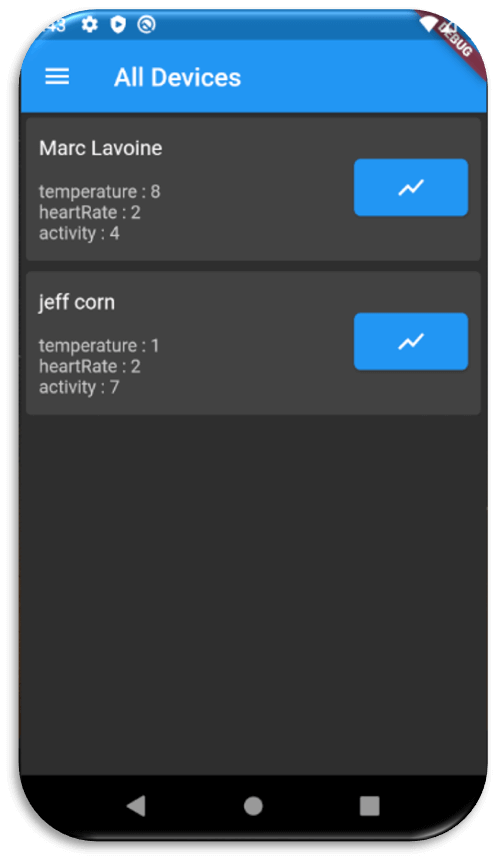
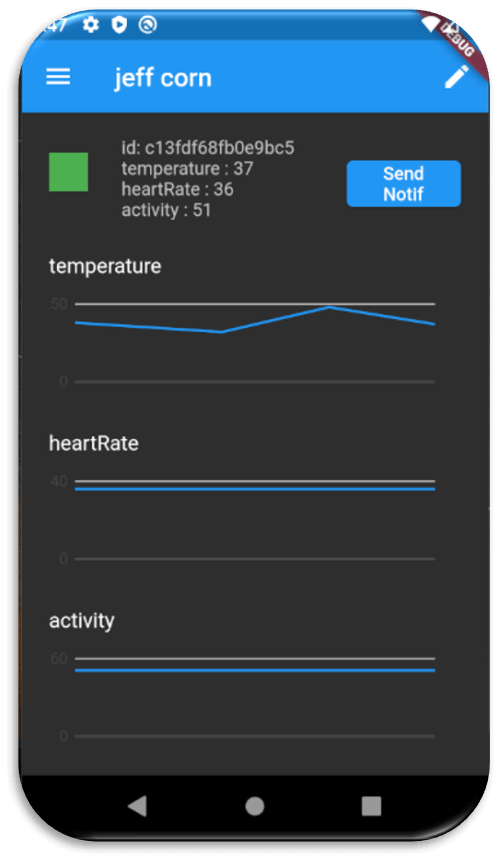
This is the next version of the LoRaWAN Health V1 with a new backend, new device, and adapted mobile app. It uses AWS services with AWS CDK for a simple and faster deployment to production compared to the containerized version. Services such as AWS wireless (LoRaWAN), cognito, dynamodb and timestream increased the development speed as well as reducing its cost.

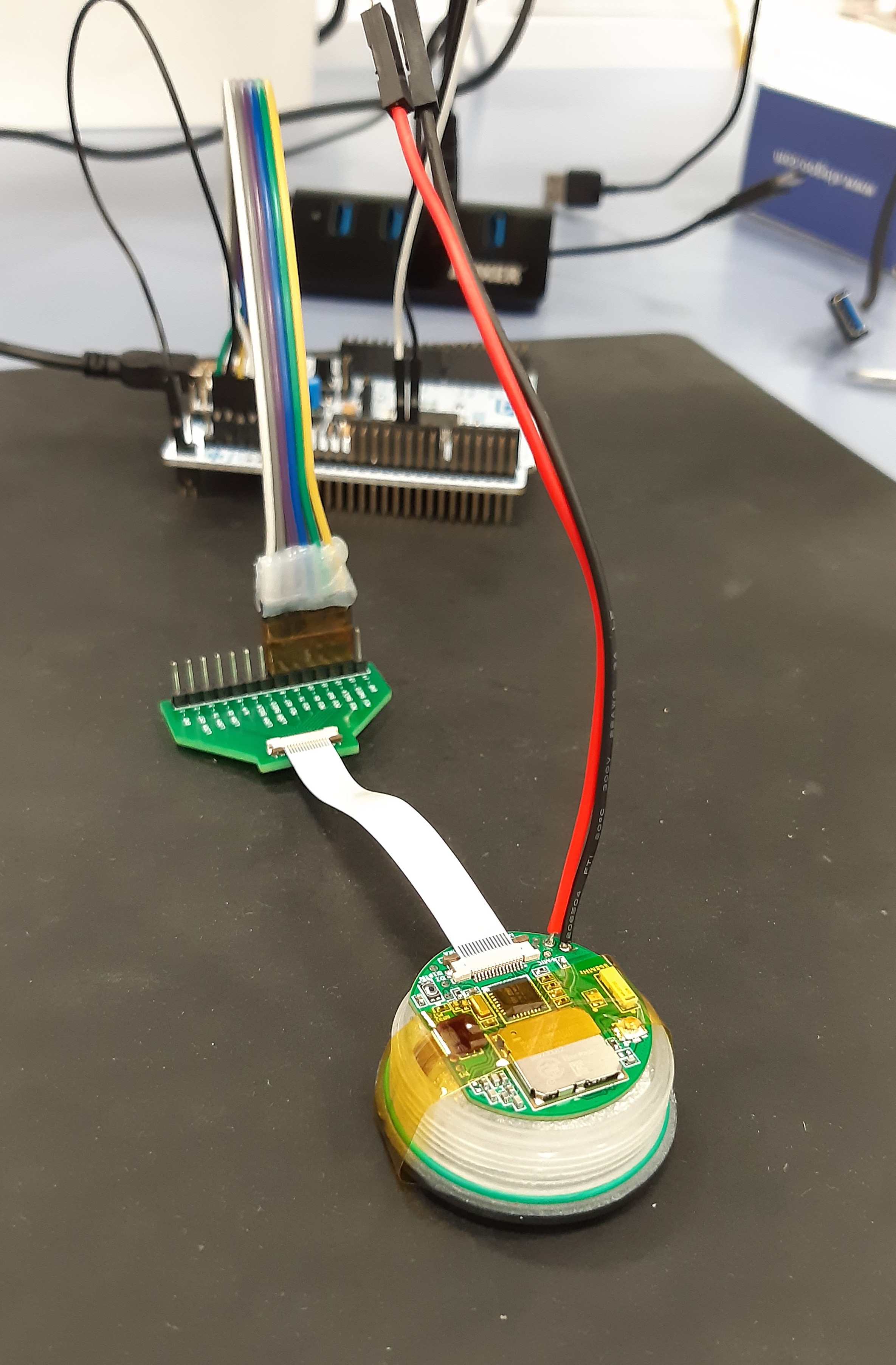
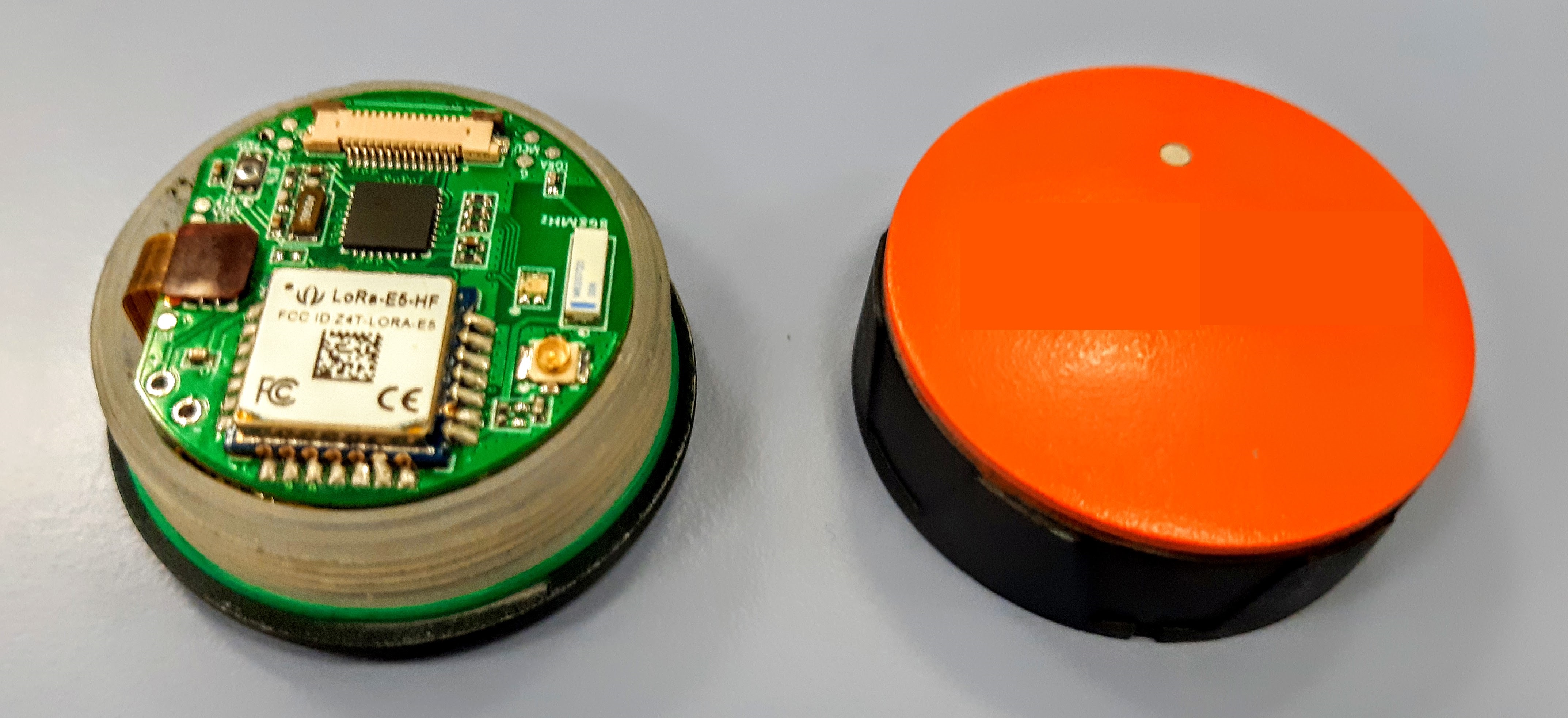
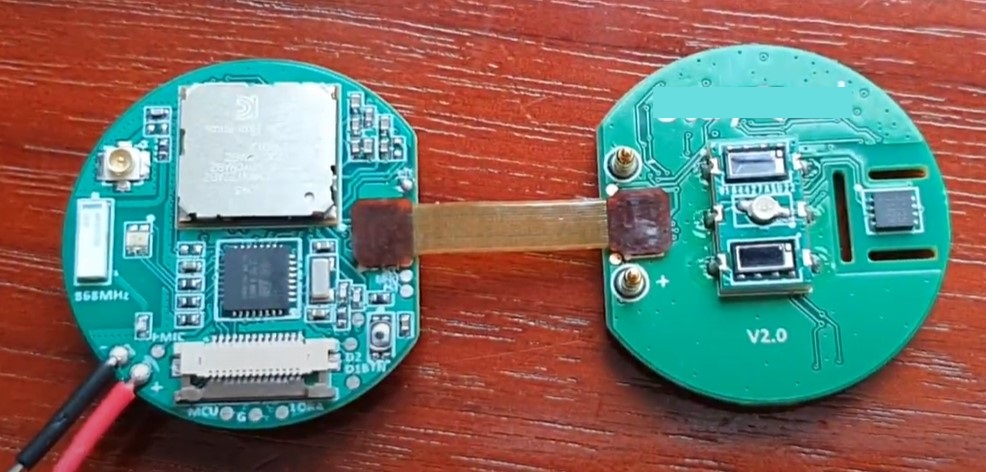
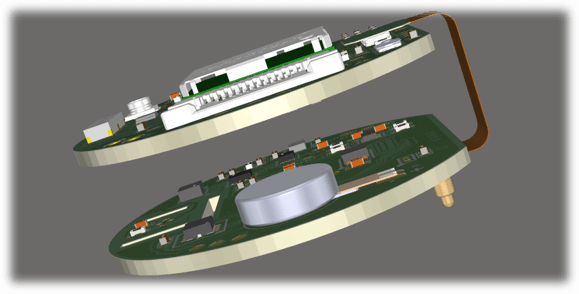
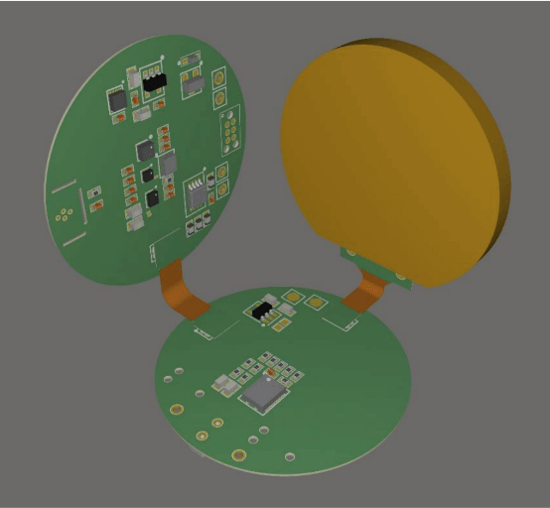
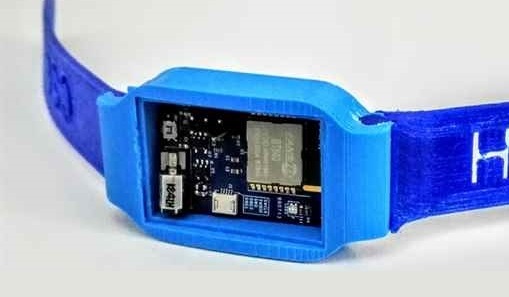
The device consist of two Rigid/Flex PCBs with a sandwiched round battery, placed inside a wrist worn garment. It measures the wearer heart-rate, temperature and movement to gather data in order to detect abnormal vital signs.

Key Points:

  • Serverless with AWS-CDK
  • AWS LoRaWAN Broker
  • Fast to enter in production
  • Rigid/Flex PCB assembly

More details

This project page has been separated into to project pages 'LoRaWAN Health V1' and 'LoRaWAN Health V2' as they represents two distinct approach to its backend development.

The previous version used docker with self-managed services with quite a few moving parts and hence higher development complexity (for a team of 1 person).

In this version I moved to a totally different architecture with AWS services which enabled for a much quicker development and much lower operation complexity, at the price of vendor lock-in.

  • Cloud & Backend
  • PCB & Hardware
  • Wireless
  • Mobile & Frontend
  • LoRaWAN
  • AWS CDK
  • Serverless
  • Flutter
  • PCB design

LoRaWAN Health V1

HBKU, Doha, Qatar2019 - 2020
LoRaWAN Wristwatches architecture
Wristwatch PCB
Mobile App
Mobile App graphs
Rigid Flex PCB
LoRaWAN Wristwatches architecture
Mobile App graph
Cloud Architecture

The overall goal being to monitor the health status of hundreds of persons at a time within a perimeter of few hundred meters. The typical scenario is for outdoor groups , possibly elderly persons in retirement houses, outdoor workers under a tough weather, health-fragile children in schools, etc...

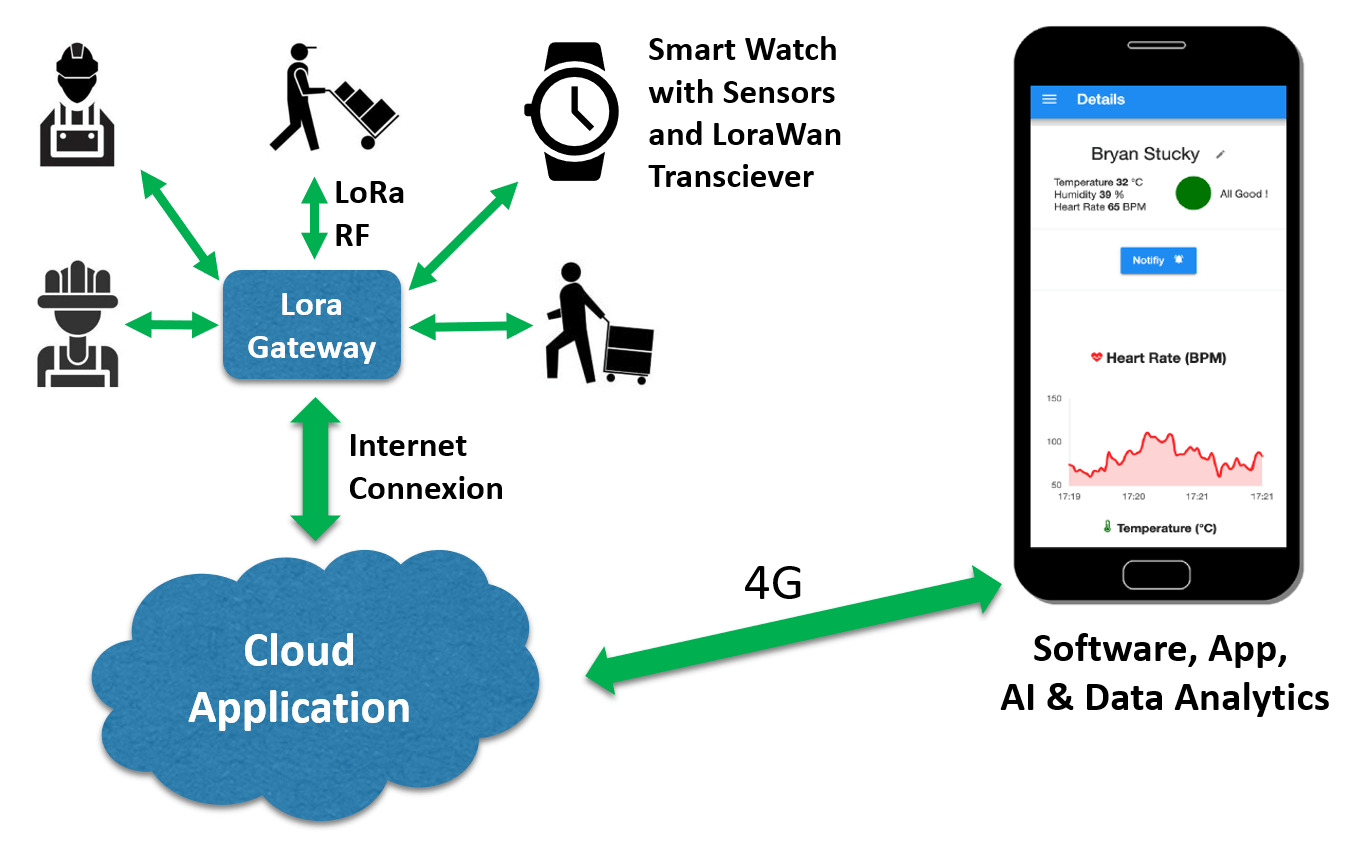
This system uses a wristwatch with wireless capabilities (LoRaWAN) and various sensors (heart-rate, temperature, acceleration) to extract the crucial data before sending it to our cloud application for analytics and decision making.

The "decision" being taken is only here to help health professionals . For example issuing a warning to the physician connected to our app, signaling that one of the wristwatch wearer may require further examination, based on alarming heart-rate, temperature, fall detection or dehydration level.

This project is the continuation with a total revamp of the wristwatch monitoring system.

Key points:

  • PCB made with Altium Designer, Multi-PCB with Flex connectors
  • Embedded system based on a STM32 chip
  • Dockerized LoRaWAN backend based on ChirpStack
  • Dockerized application backend with Express.js and PostgreSQL
  • Mobile app with Flutter for data visualization and notifications
More details

With the use of the LoRaWAN protocol/devices, we can now received data within a kilometer range, still at a low frequency/bandwidth, hence a mandatory processing is made on the wristwatches. The system is now simpler to deploy with only one or few LoRaWAN gateways, rather than tens of mesh relays and gateway.

For the wristwatch and its PCB, we developed a custom system made of several stacked PCBs connected with our own flex connectors. The case/garment that will host this system is developed by a third party company, whom we are in close collaboration.

The Firmware of the STM32 chip within the PCB is written in C and is responsible for controlling the LoRaWAN chip (also from STM) and sampling the sensors. The heart-rate sensor is an entire system by itself with and IC responsible for the data sampling and processing, with extraction of the features. Battery management/protection are also a part that we designed with a lot of care.

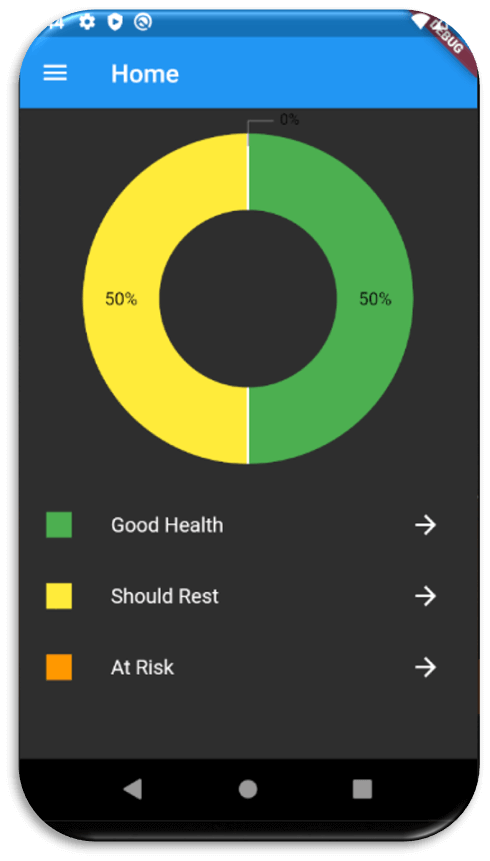
The Mobile App has been written with the Flutter SDK. It is used to log the user in, fetch health data online and send/receive notifications.

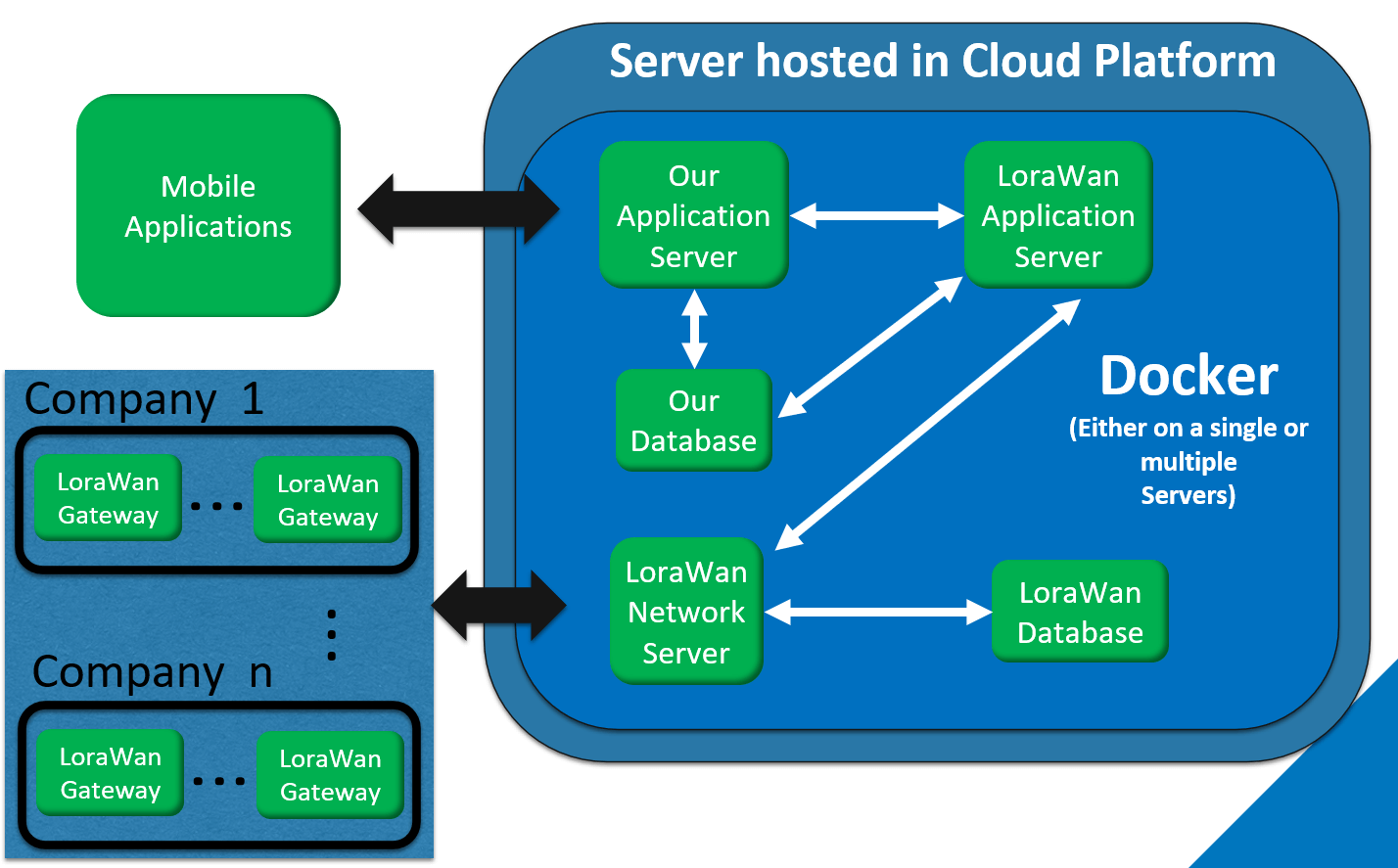
The LoRaWAN Dockerized Backend is using the ChirpStack project, which allows us to deploy our own LoRaWAN network and application servers. By using our own network server we are able to manage a higher throughput for the system as well as a fine grained control on the application.

Our Dockerized Backend application is there to manage the user, the access to the health data, the notification system, and so one. Its most notable components are Express.js, PostgreSQL, Socket.IO.

  • Cloud & Backend
  • Embedded & Firmware
  • PCB & Hardware
  • Wireless
  • Mobile & Frontend
  • LoRaWAN
  • Full-Stack App
  • C prog.
  • Flutter
  • Node.js
  • PCB design
  • AWS

This Website

HBKU, Doha, Qatar2019 - Present
maximeclement.com home page

This website is fully static and built with loading speed and Search Engine Optimization in mind, thanks to Astro and Tailwind CSS. It ships almost no JavaScript.

It has been rewritten several times: first with Angular 2, then with Next.js and MUI, and now with Astro and Tailwind CSS, to be as light and fast as possible.

Project on GitHub

More details

A static and well-optimized website, nothing too fancy.

The color selection and UI design are my own.

  • Mobile & Frontend
  • Astro
  • Tailwind CSS
  • Static site
  • SEO

Wootch

HBKU, Doha, Qatar2021
Embedded UI
Cloud Architecture
Unfolded PCB Wootch
Altium
AWS CDK
Embedded UI on watch
Altium PCB preview
Embedded UI on watch

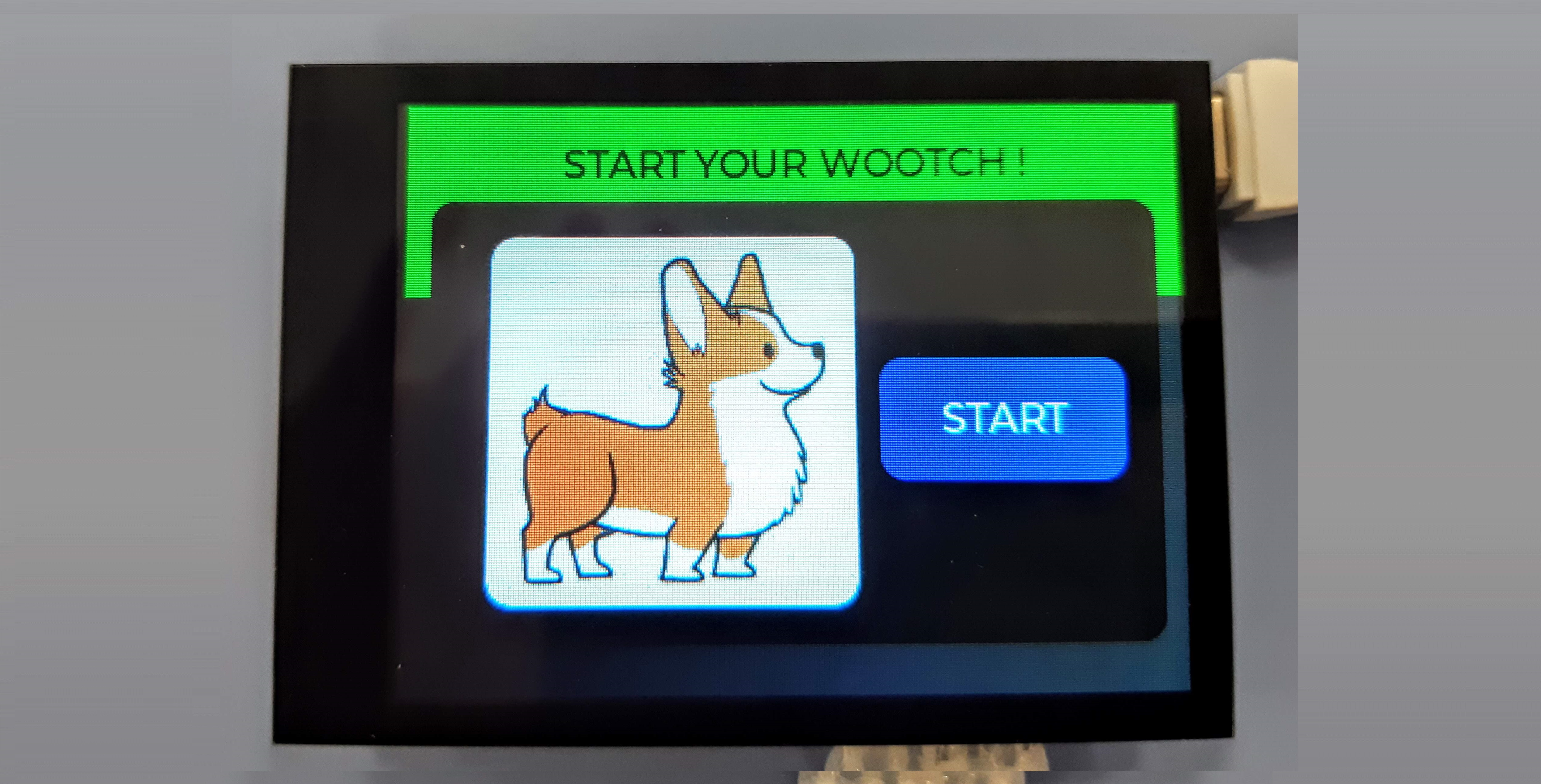
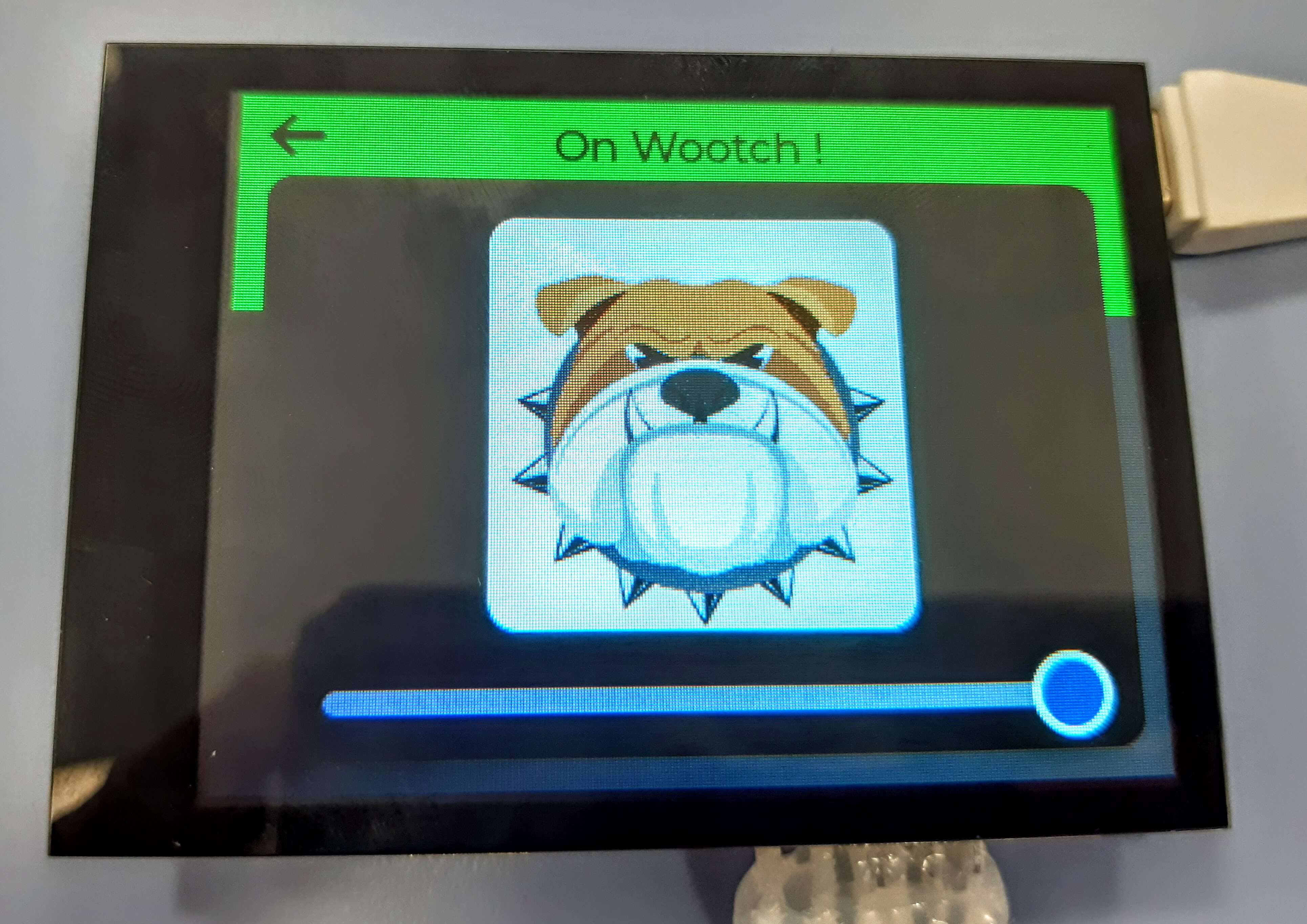
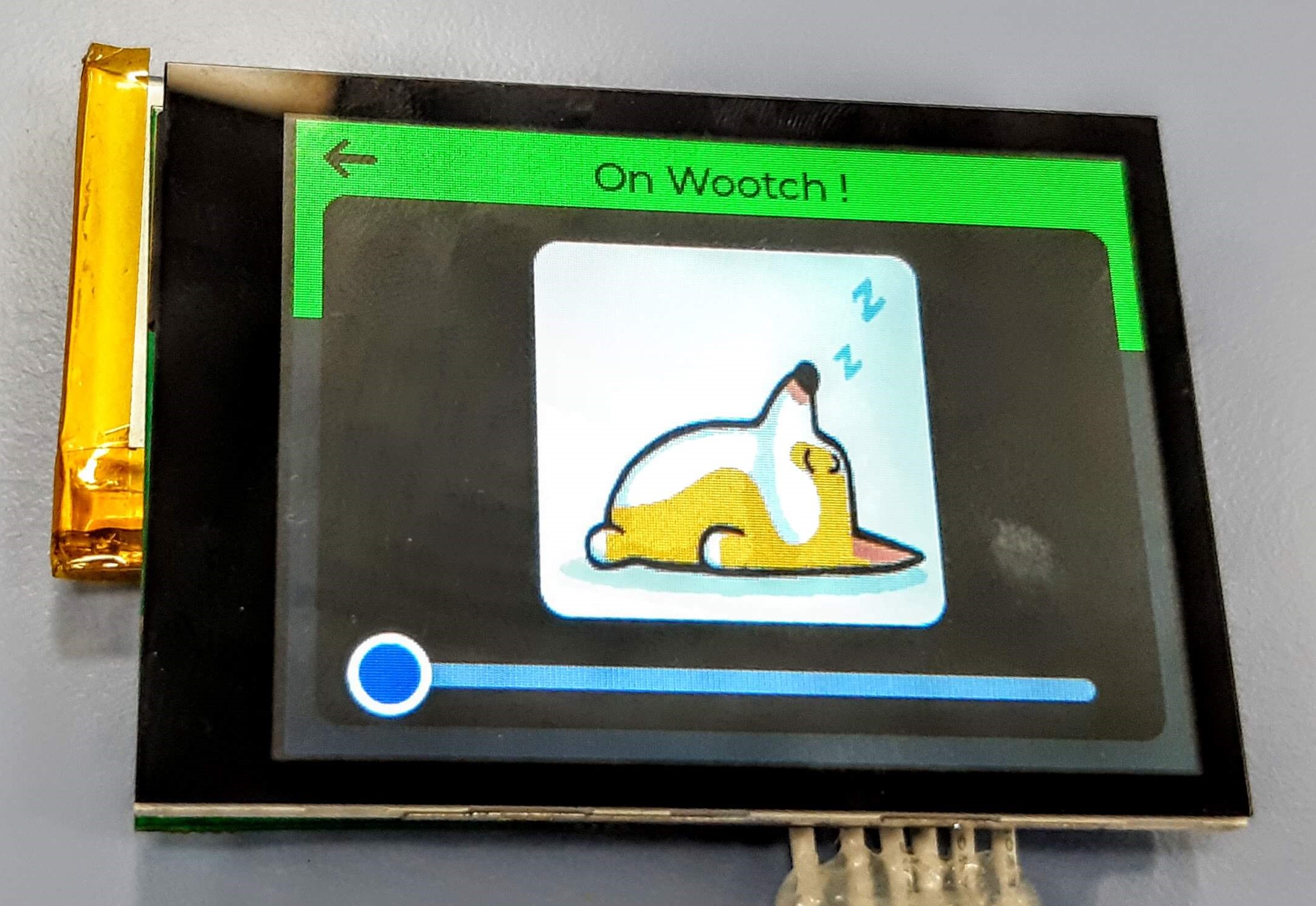
Wootch is an IoT device to monitor a door or any object activity and detect whether it is being moved. It then sends notifications to your registered device (phone or other) in case any activity is happening. Its intuitive Embedded UI helps you to set your level of guard ! (It can vibrate as soon as its door/object get touched, send you a message or let you live your life). It is connected to a cloud application to make sense of the sensors' data.

This one is personal project where I can experiment with technologies new to me. Namely, Embedded UI (LVGL), Wi-Fi-enabled MCU (ESP32) and Serverless Application (Serverless Framework).

Key points:

  • PCB Design integrating esp32 and LCD
  • Embedded UI (LVGL) with touch control
  • Serverless infrastructure on AWS Cloud
  • AWS-IoT core with MQTT

Project on GitHub

More details

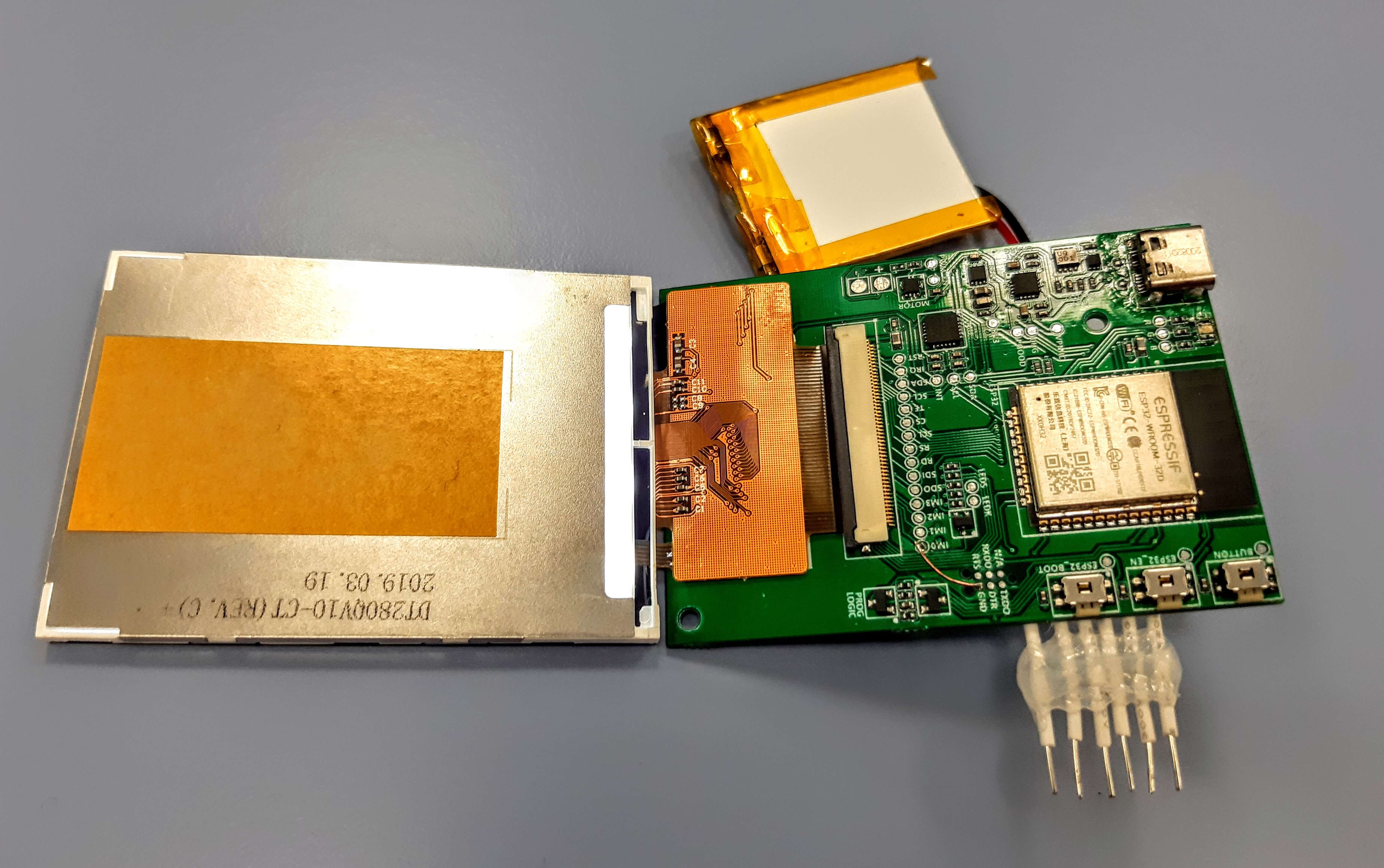
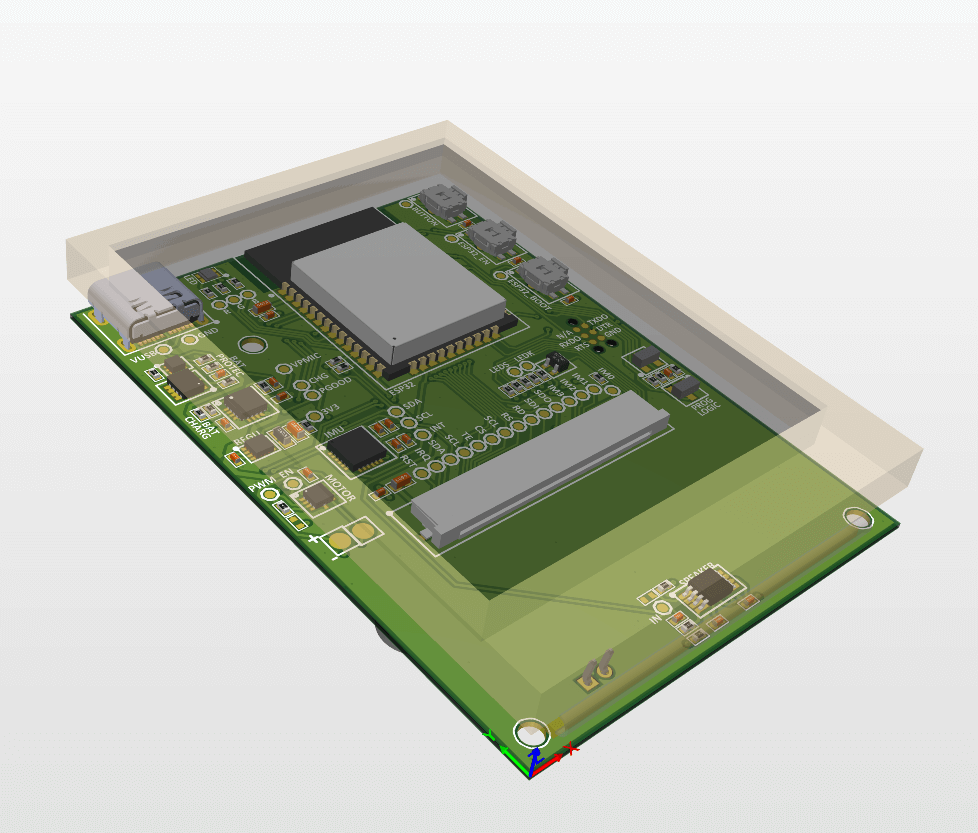
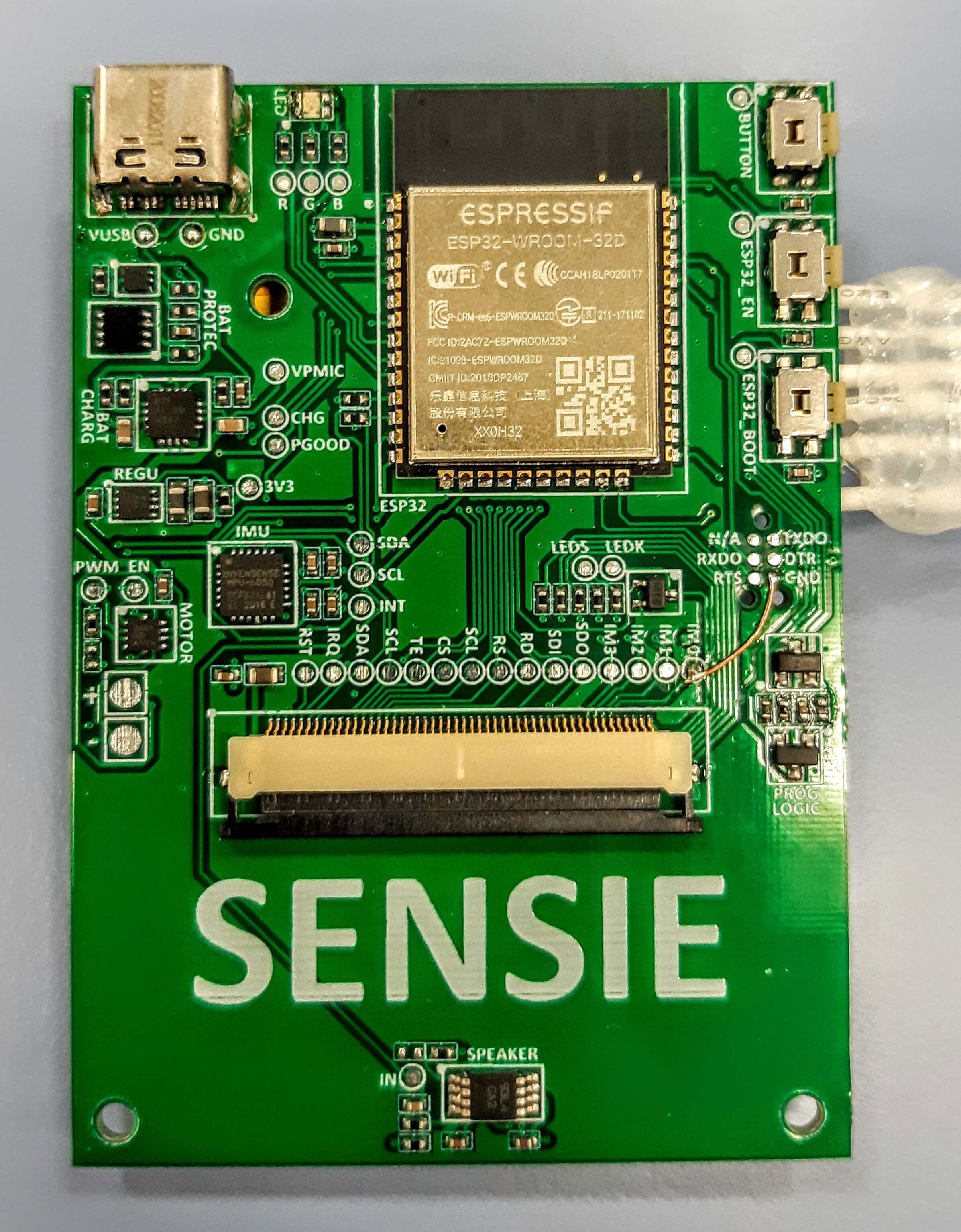
Wootch's PCB has been made on Altium Designer. it features:

  • Battery management, protection and regulators (buck)
  • Inertial Measurement Unit (IMU, accelero + gyro)
  • FPC connector for 3.5 inches LCD (480*320px) touch capacitive
  • Wi-Fi-enabled MCU (esp32)
  • Vibration motor and controller IC
  • Speaker amplifier
  • USB C charging
  • Push buttons and RGB LED
  • Programmer/debugger

The code is written in C (not C++) along the ESP-IDF SDK . its main component are the following:

  • ESP-IDF SDK, peripheral, Wi-Fi, RTOS.
  • LvGL graphical library, to easily create responsive UI and provide support for the touch sensitive screen.
  • esp_mpu60x0_C, MPU6050 IC from Invensense driver in C.
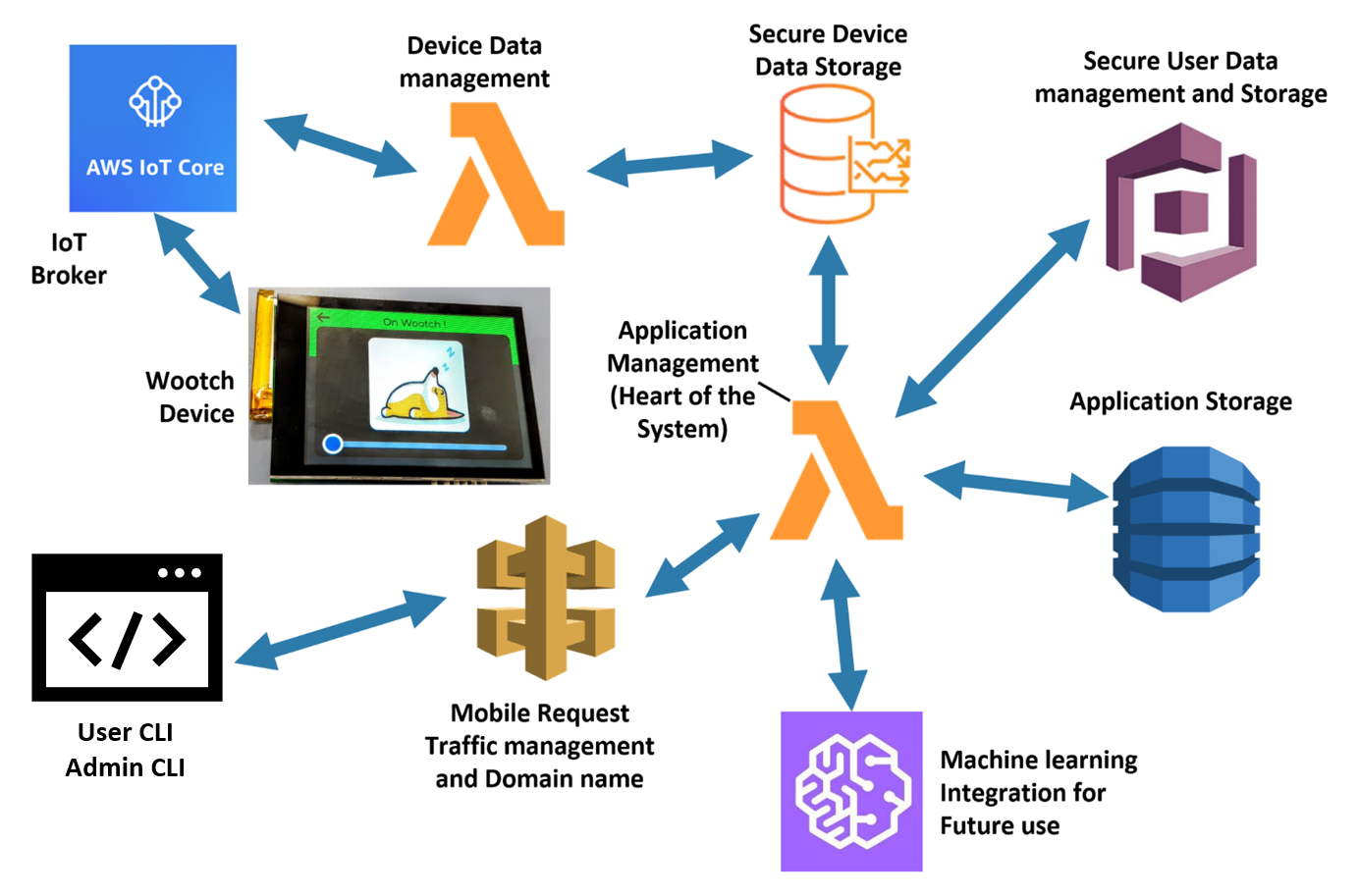
  • ESP-AWS-IOT to interface with the AWS IoT-core service and provide a light-weight, fast and secured with AWS servers. It leverages the MQTT protocol with asymmetric key exchange, symmetric encryption.

The Backend will use the serverless framework:

  • Receive MQTT messages,
  • Extract data and store them in a dynamoDB Database
  • Run analytics on the stored data
  • Manage users
  • Manage IoT "things" and secure their data link
  • Cloud & Backend
  • Embedded & Firmware
  • PCB & Hardware
  • Wireless
  • Mobile & Frontend
  • Wi-Fi
  • PCB Design
  • Serverless AWS
  • C prog
  • Flutter
  • Full-Stack

Smart Mask with App

HBKU, Doha, Qatar2020
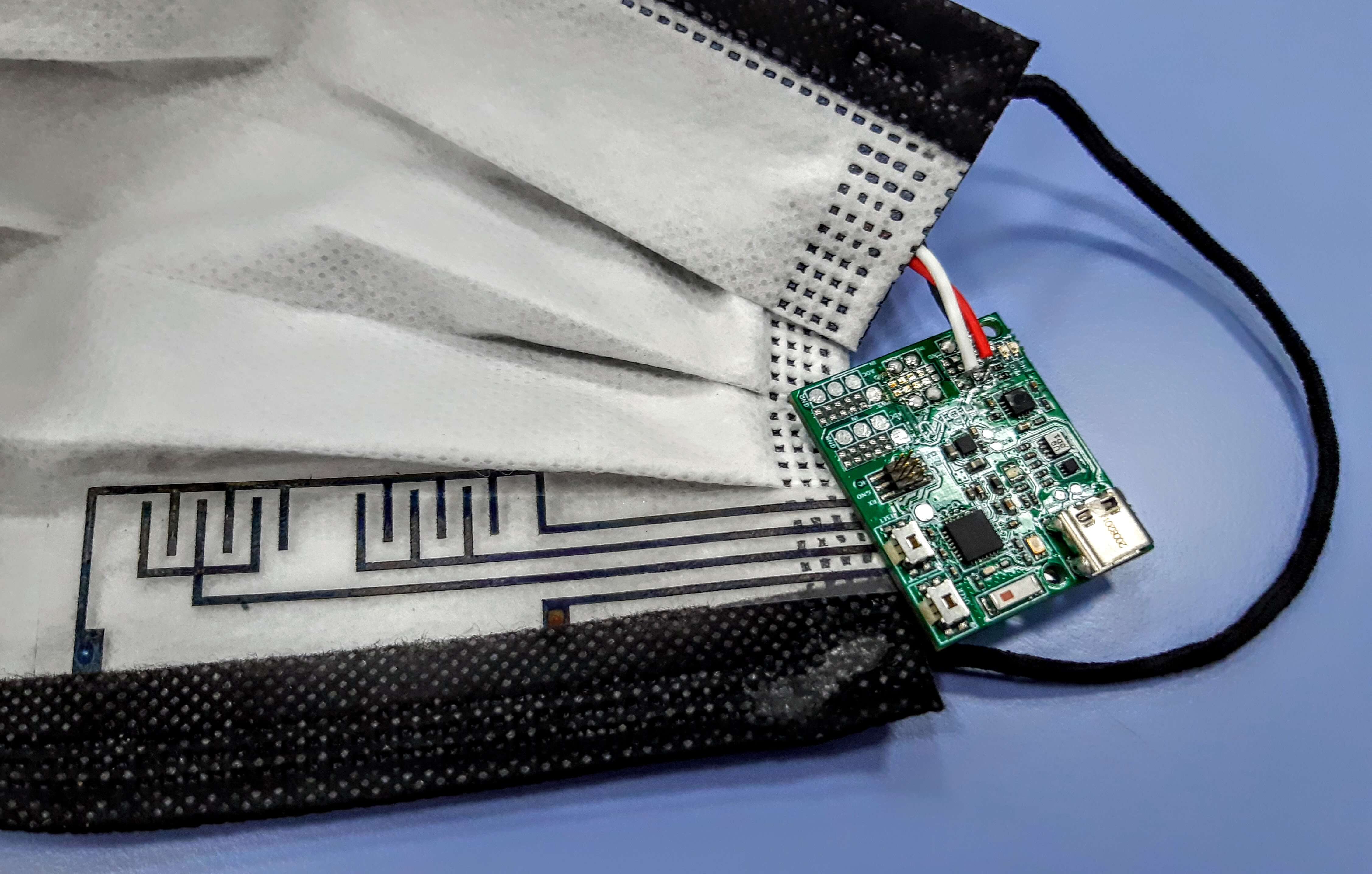
Smart mask PCB
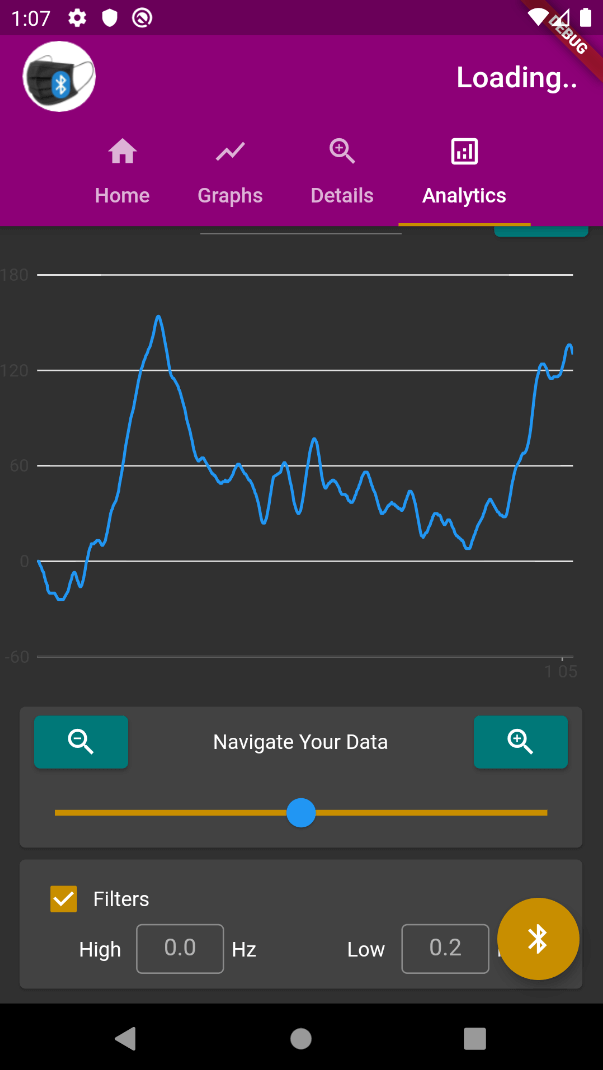
Mobile App analytics
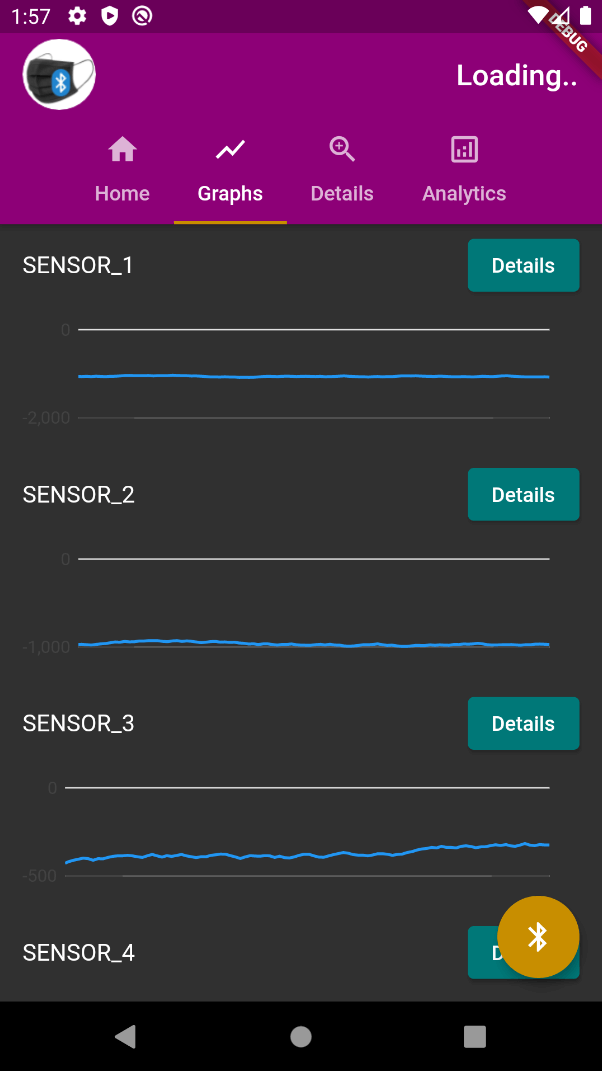
Mobile app graph smart mask
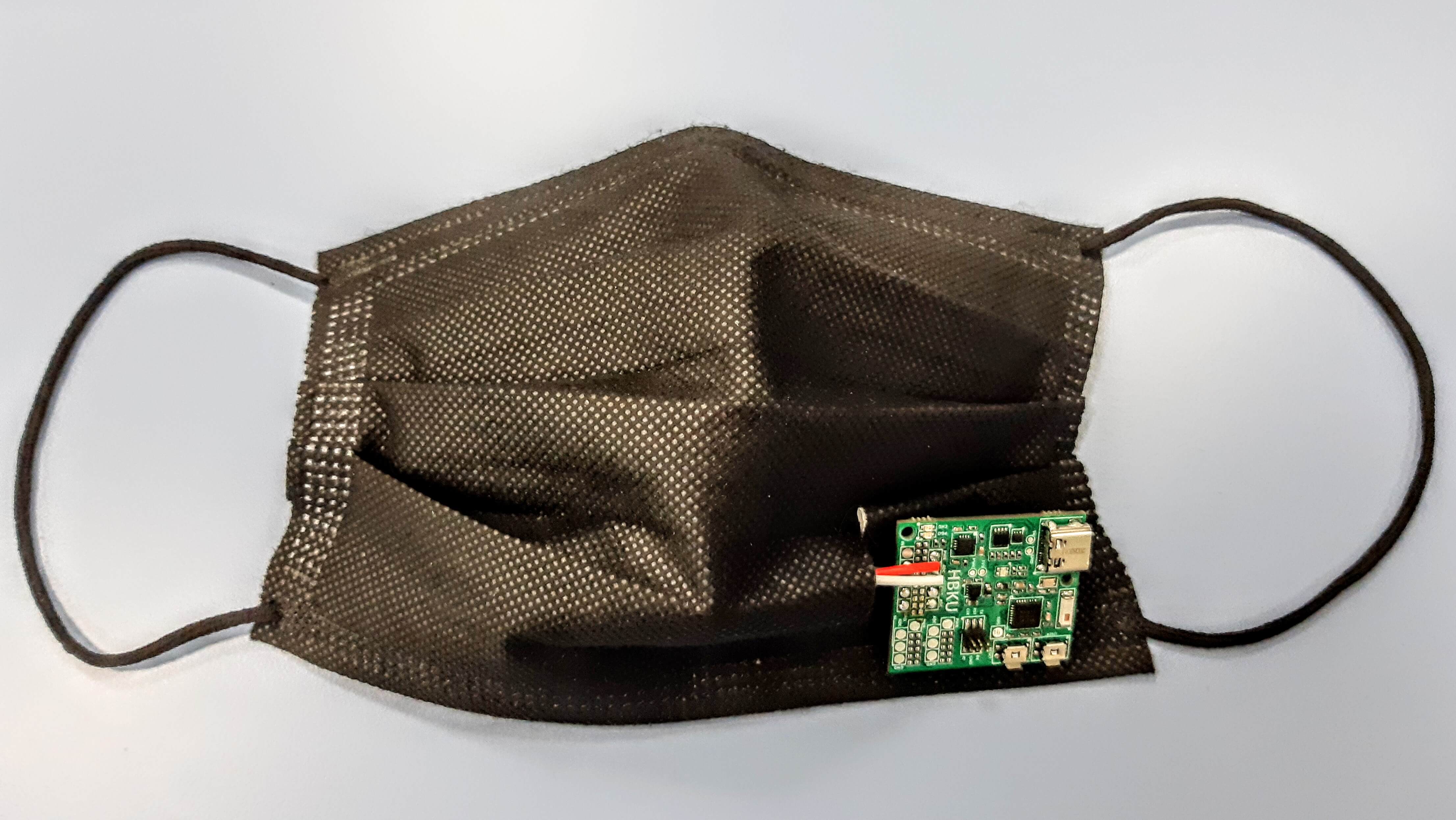
Smart PCB attached to mask
Embedded Device IDE
Altium preview PCB smart mask

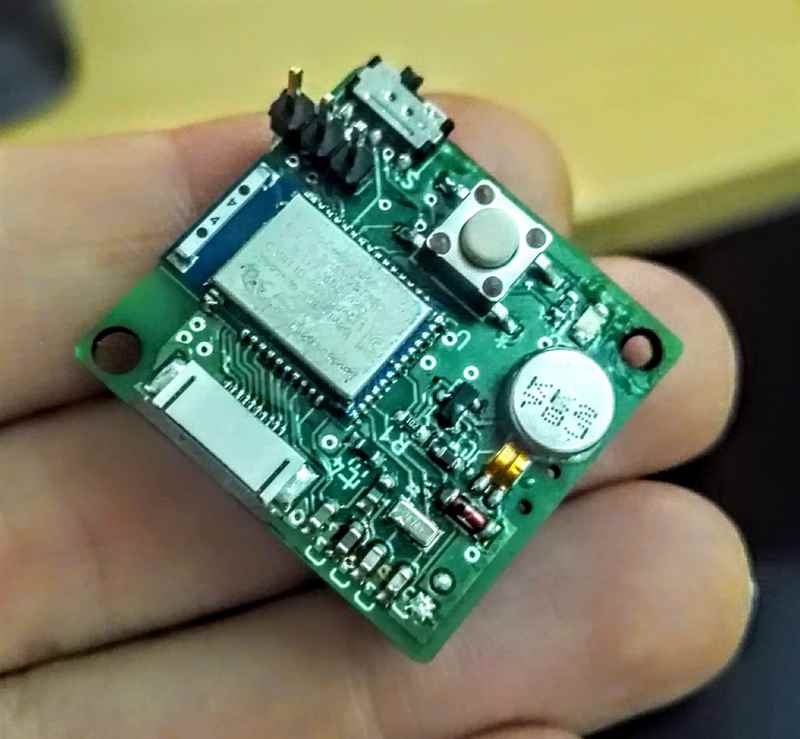
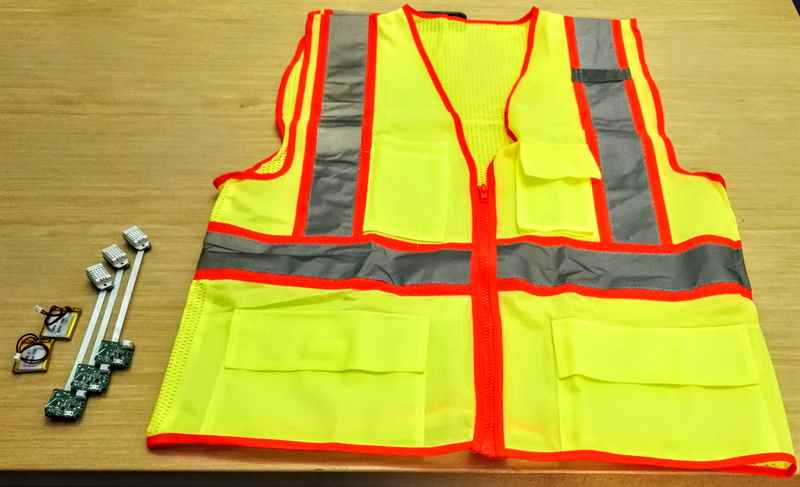
This Smart mask is a system aiming to gather, filter and analyze sensor data placed on a surgical mask . The goal is to offer a generic platform for our Sensor Research team to showcase their custom printed sensors and enable them to acquire data and work it with an intuitive UI and bluetooth connection. The embedded system is to be detachable to allow for the user to easy swap the mask with printed sensors in it. The application enable to store, filter and navigate through the sensor data contained in local Database.

Key points:

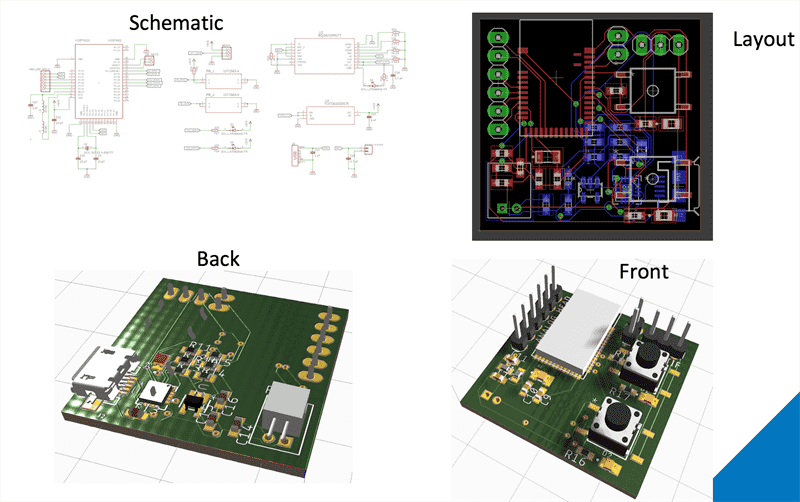
  • A Printed Circuit Board (PCB) for the embedded system, made with Altium Designer
  • An embedded system firmware, written in C (Nordic SDK)
  • A Flutter mobile application, for Bluetooth connection, data storage and presentation

Project on GitHub

More details

This project start when our Sensor research team needed a way to test their sensors in real life case scenario and showcase them for the multiple event that HBKU hosted.

One objective was to make this project adaptable for various product situation (smart mask, clothes, appliances, etc...), the printed sensors being the main varying element. We therefore opted for a Bluetooth enabled platform to be connected to a mobile application.

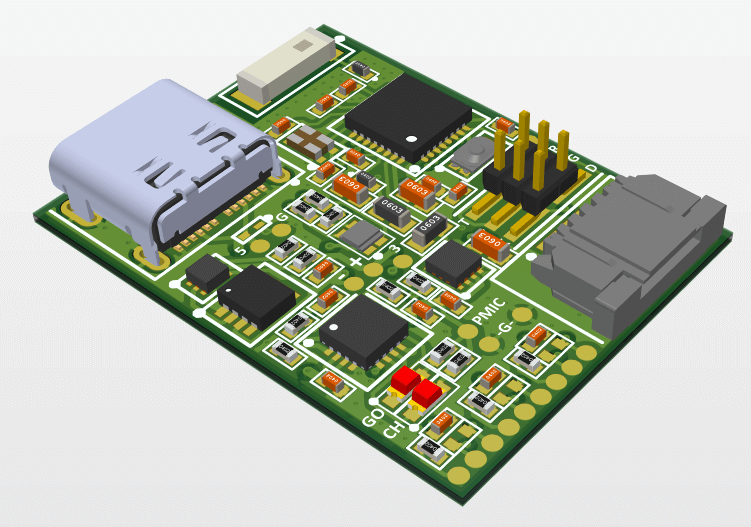
The circuit itself possess a Bluetooth device from Nordic acting as the main computing and communicating component. USB-C, power supplies, battery management/protection, LEDs, RC filters, flat connectors for the printed sensor are all the peripheral we needed to make this system works.

It connects to the mobile app through a bluetooth link which enable us to sample the sensor and control the embedded system (sample rate, gain, etc...). The mobile application manages the Bluetooth connection and the sensor data storage in a local database. Finally, a large part of the application consists on an offline tool for navigating and filtering the data (analytics).

  • PCB & Hardware
  • Wireless
  • Mobile & Frontend
  • Research & Teaching
  • Bluetooth
  • Flutter
  • PCB Design
  • Flexible Sensors

Algorithms & Architecture

HBKU, Doha, Qatar2018 - Present
Path finding Algorithm codewars
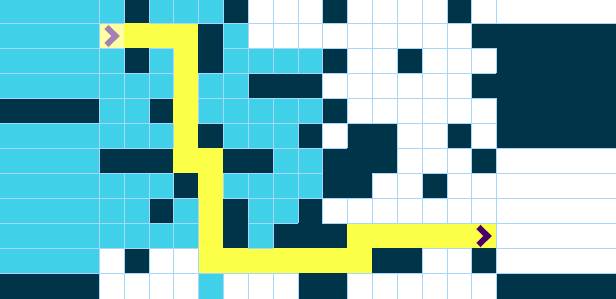
This one is not a project as such. Rather, it is a quest to improve my skills in coding. Coming from embedded System I was comfortable with electronic, DSP and low level programming. However when entering in the realm of cloud computing I felt that I had to learn more about Algorithm, design pattern and software architecture. This is why I started (and finished) plenty online programming courses (mainly on Udemy ) and lots of books. To test and learn by doing, I spent quite some time solving programming problems on Codewars (you can find my account here). It gave me the confidence I needed to tackle more challenging problems, or projects outside of the realm of embedded systems. I don't spend that much time on this topic these days as I focus on working directly on projects. However that period contributed a lot in the development of my software skills.
More details

Topic Studied and Resources

  • Many programming challenges/problems solved on Codewars
  • Python design patterns
  • Full stack applications design
  • Algorithms design and usage
  • SQL and NoSQL databases
  • Cloud computing with AWS
  • Research & Teaching
  • Algorithm
  • Competitive Coding
  • Codewars

Thread Mesh Watch

HBKU, Doha, Qatar2018
3D Printed Wristwatch with PCB
Angular Frontend Graphs
System architecture
Angular GUI summary
Angular GUI Graph
Debug and Production Boards PCB
Eagle PCB preview Production
Eagle PCB preview Debug

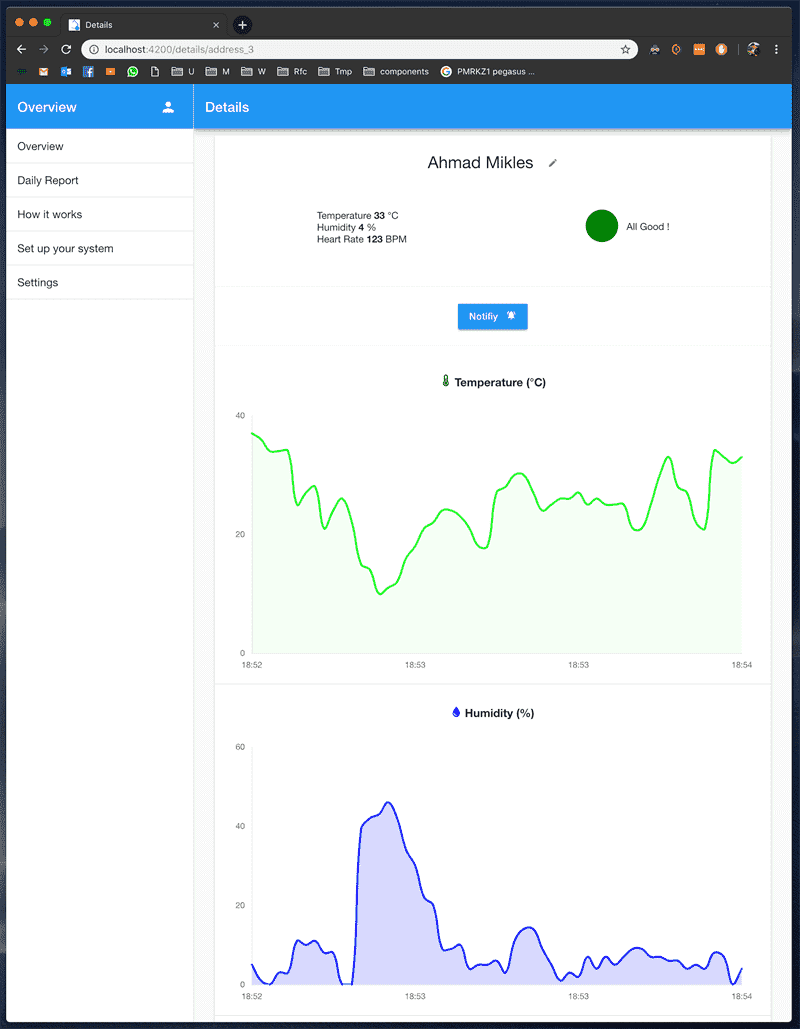
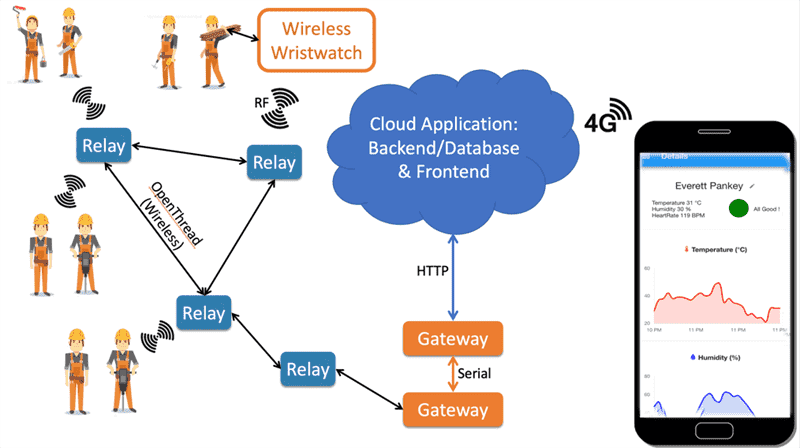
We designed a Wristwatch made to worn by hundreds of persons (typically outdoor workers). It record the heart rate , oximetry, temperature of the bearer. It is connected to a low power network (Thread standard, similar to zigbee) around the work area. Data are sent to a gateway (single board computer) itself on the work are, that has an internet connection. The gateway sent them to a full-stack application host on the cloud (AWS). Finally the users can see their health status on a website ( frontend ) and receive notification in case of alarming states.

Key points:

  • Full-stack Application ( MEAN stack)
  • Embedded System Programming ( Nordic )
  • Electronic Design with Eagle (wristwatch with sensors)
  • wireless communications ( Thread protocol)

Project on GitHub

More details
Now, for the practical part:

We have developed a custom wrist-mounted device, RF enabled, that integrates into a low-power Mesh network ( OpenThread ). All Bio data are sent to our server hosting a full stack application (backend/database and front end). This system is easily scalable so hundreds of companies can monitor the health status of hundreds of their employees. 


Overall Behavior and Hierarchy of the system:   

Each person is wearing a custom smart wristwatch that contains essentially two temperature sensors (on for the skin and one for the ambient temperature, one heart rate / oximetry sensor (oxygen level), and one dehydration sensor (that is still under development with our research team). Each of these devices is transmitting and listening data from the RF low-power network they are authenticated to, at regular intervals. The network is created by a set of routers that relay the sensor data to a gateway, which is a router connected to a board computer with an internet access. This RF mesh network protocol is the OpenThread implementation, for low-power, (relatively) high bandwidth and latency, and robustness. This Gateway, send data to our backend application, hosted online , with a by directional communication . That way, our server online can received and send data to each node. Finally we designed a frontend application (website) that can display all of these data and control the overall behavior of the system. Moreover, this system integrate user authentication, meaning that we can easily scale this system up, so that many different company can have their own sets of wristwatch/routers/gateway and access their data online, securely, as we are using the latest security technologies, both for the online server, the mesh network and the hardware. 


The breakdown of the project's components (and codes): 
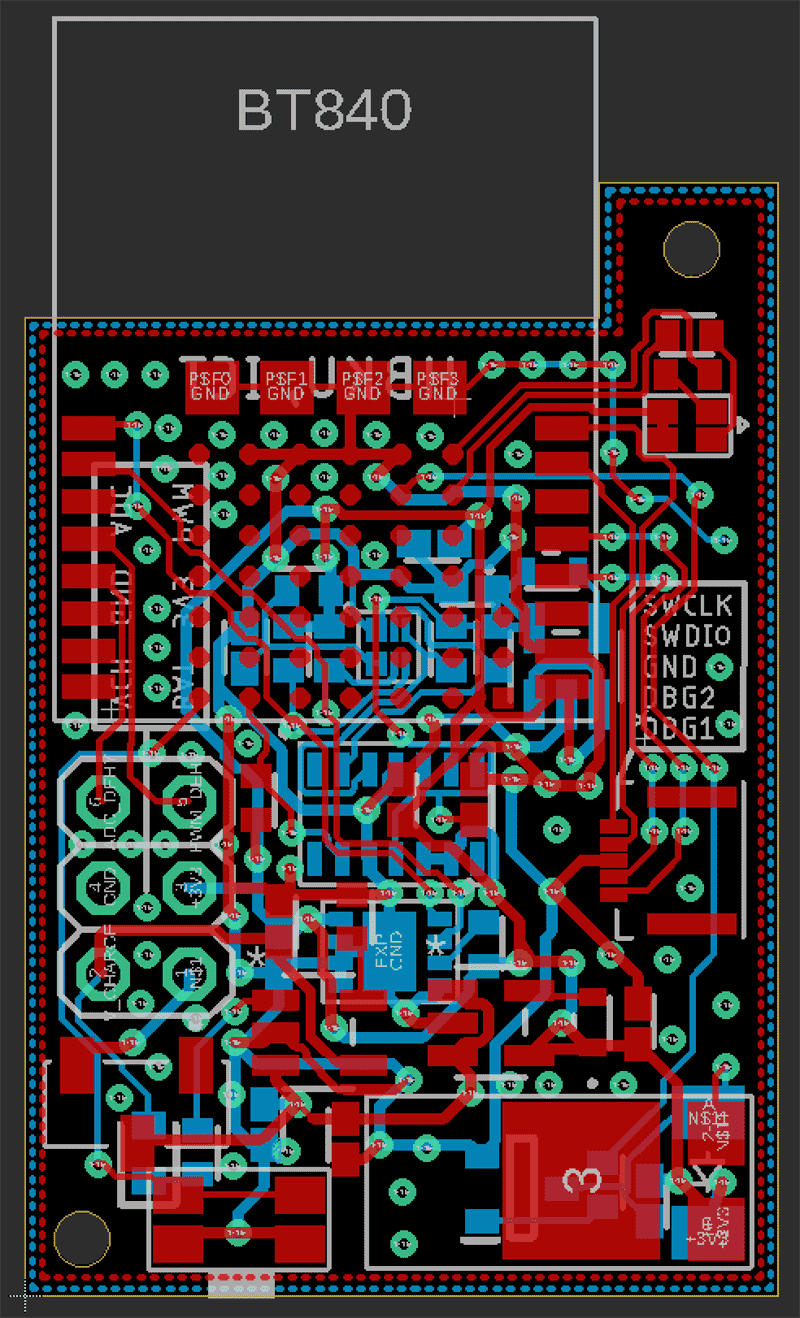
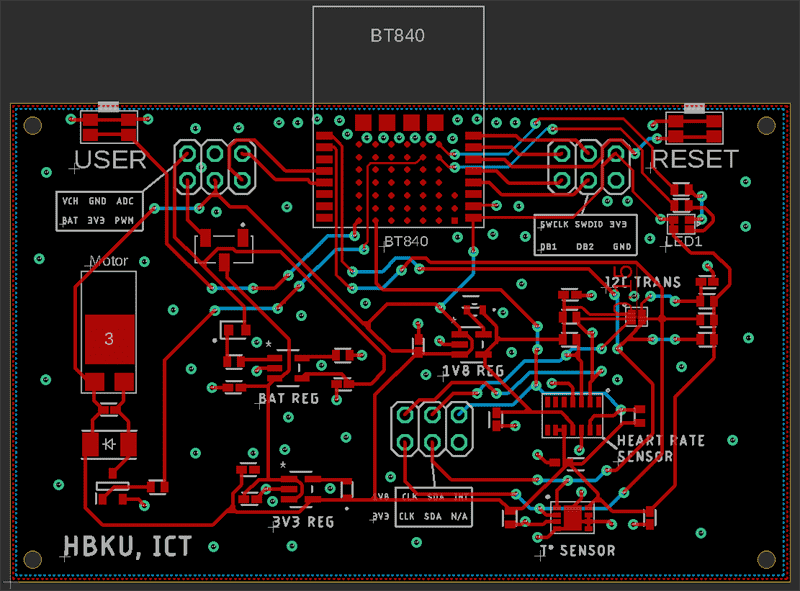
  • Wrist-mounted device (wristwatch), containing sensors and wireless chip for the mesh network communication, battery powered, with a firmware written in C. This system is custom made by our team, which concerns both the Printed Circuit Board (PCB) and the wristwatch bracelet (3D printed with hard and soft materials). 
  • Mesh Router device (plugged to a wall socket) containing a wireless chip with a power amplifier (firmware written in C as well). This system is also custom made (PCB, and 3D printed case). 
  • Mesh Gateway device with the same component as the Router above; it role is entirely different as It is the interface between our mesh network and the single board computer, with which they communicate via a serial connection (C programming). 
  • Gateway device , which is a single board computer running a Node.js daemon program, which make the link between our full-stack application and the Mesh network (JavaScript). 
  • Backend server application , Which consists into a REST API coupled with a Database. We used Node.js with Express and MongoDB. This application was written in JavaScript. 
  • Frontend Application (hosted by the backend server) that uses the Angular framework (Typescript/ JavaScript). 
    The 6 above parts are 6 independent programs and physical devices (except for the frontend application and backend server that are run on online servers). 
  • Cloud & Backend
  • Embedded & Firmware
  • PCB & Hardware
  • Wireless
  • Open Thread Mesh
  • Full-Stack Application
  • C programming
  • JavaScript
  • PCB design
  • Deployment

Wearable with GUI

HBKU, Doha, Qatar2017
PCB of the wearable
GUI made with pyQt
PCB and GUI with pyQt
Embedded system assembled
PCB of the wearable
PCB and jacket
PCB files

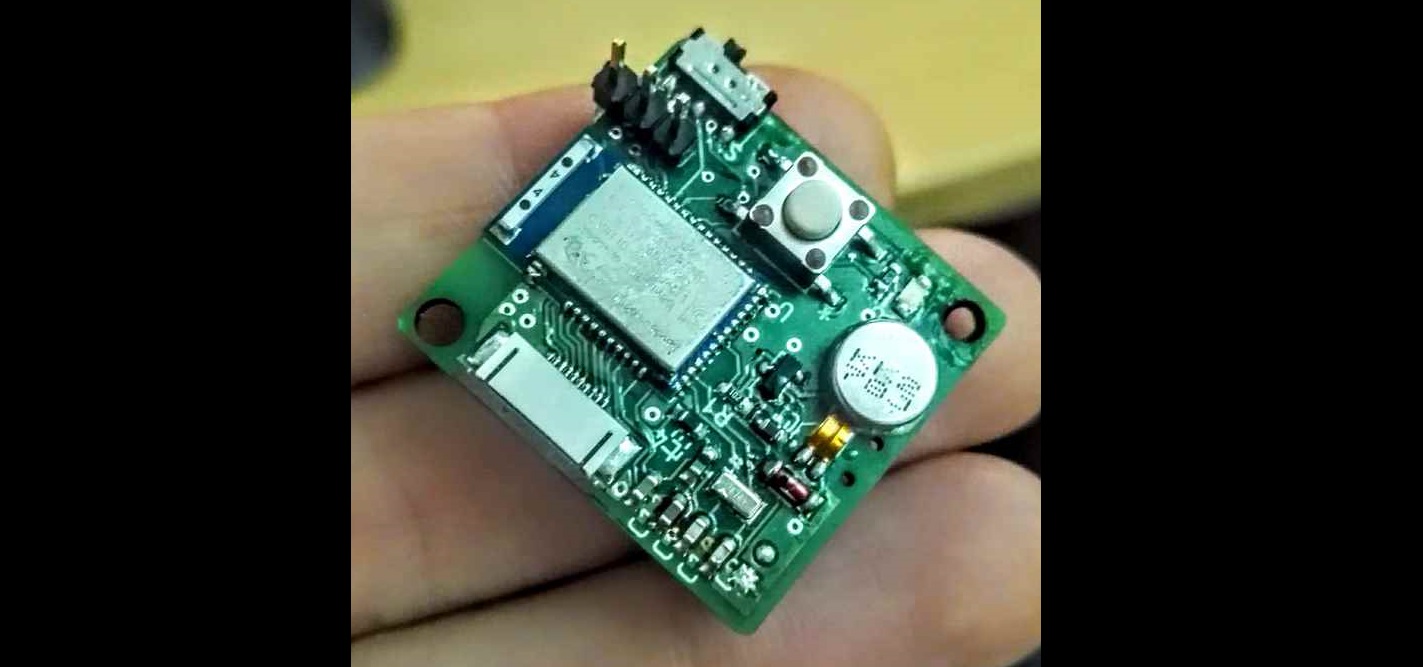
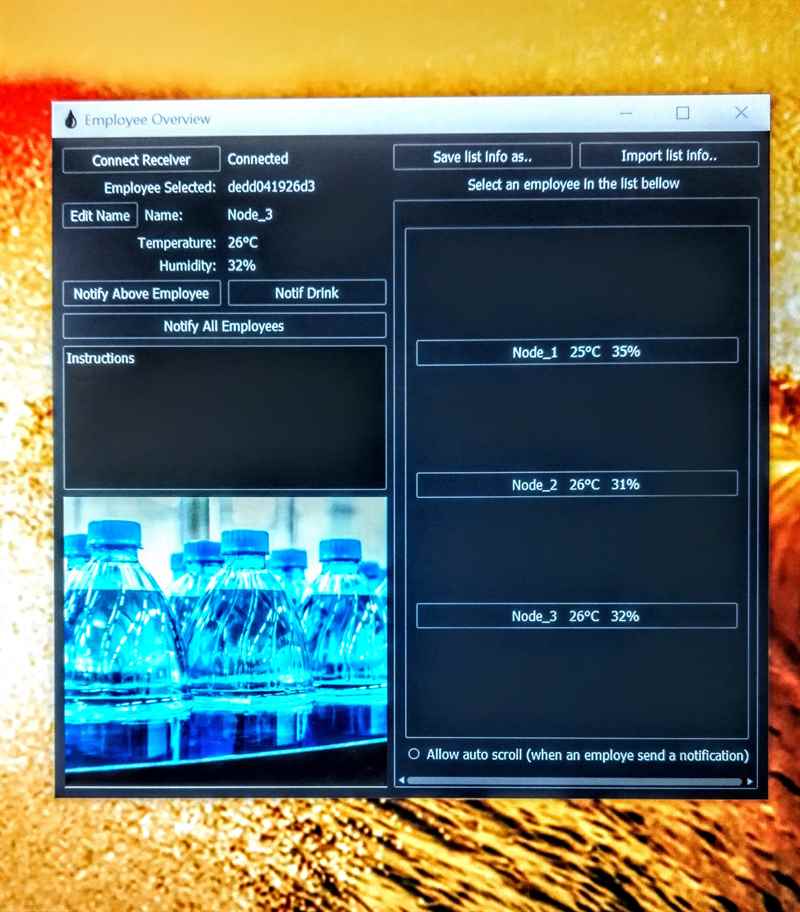
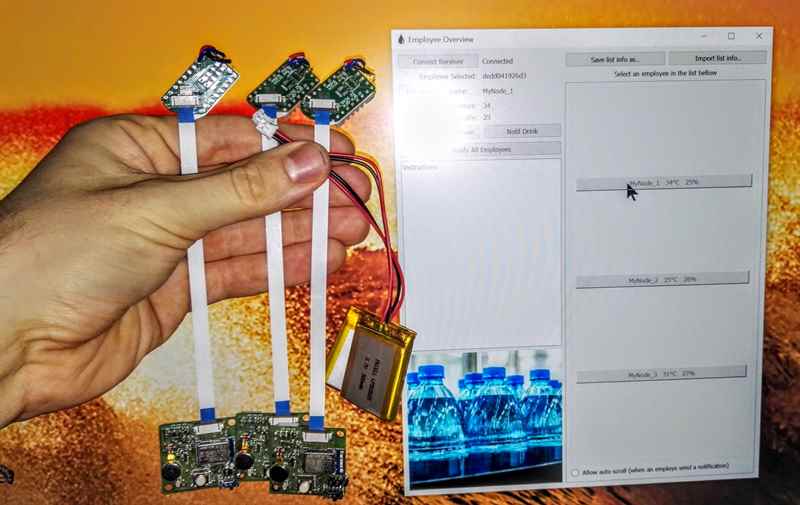
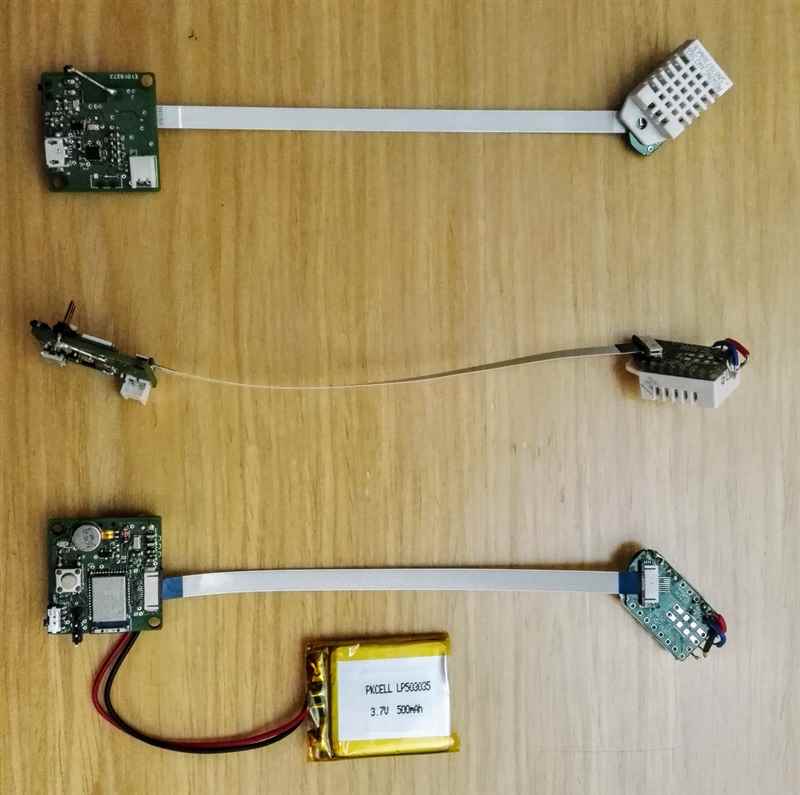
We developed a wearable system , composed of a chest band wrap and custom electronic boards to record the temperature, humidity and send notifications with LEDs and a vibrating motor. This system is connected to a central computer thanks to the Bluetooth Mesh protocol to increase the range. All vital status are displayed on a custom GUI written with pyQt in Python.

Key points:

Project on GitHub

More details
The aim of this project is to create a system that could be worn by each of the workers and transmit its sensor data to a base station located in the room.

We therefore used the Bluetooth 4.2 (BLE) protocol in a star topology with a base station being a computer for display and storage.

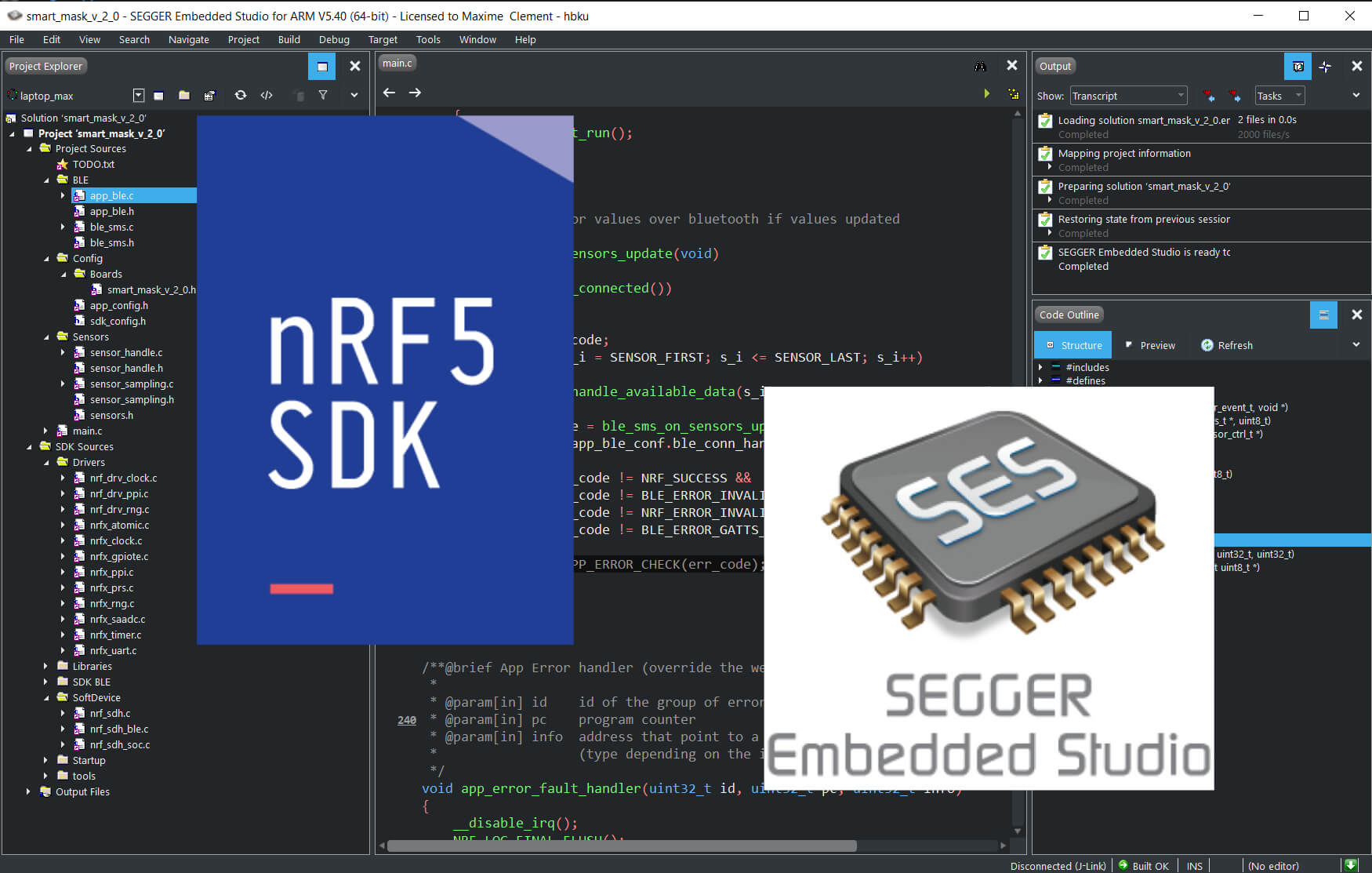
The embedded system consisted into a Nordic Semiconductor wireless MCU along power supply/management, vibration motor, LED and a FFC connector to connect multiple sensors. The base station connected to the PC was containing the same Nordic Semi chip along with a UART/USB interfacing chip. The data were then displayed on the PC. By the architecture of our system, we could connect as many node to the base station as the Bluetooth bandwidth would allow, which represents hundreds of nodes, as each node only transmit few times per minutes (which is selectable). The system is bidirectional, meaning that the Base station could send notifications/warning to the embedded system and vice versa. We designed the PCB with Eagle (Cadsoft) and had it manufactured in China, soldered in Qatar by ourselves. The code was made in C with Segger Embedded Studio. The Graphical application was written in Python with PyQt for a quick prototyping .

  • Embedded & Firmware
  • PCB & Hardware
  • Wireless
  • Mobile & Frontend
  • C programming
  • Python GUI
  • multithreading
  • smart clothes
  • PCB design
  • Bluetooth

Electronic Laboratory

HBKU, Doha, Qatar2016 - Present
Computer Sciences Lab vue 1
Educational part of the lab

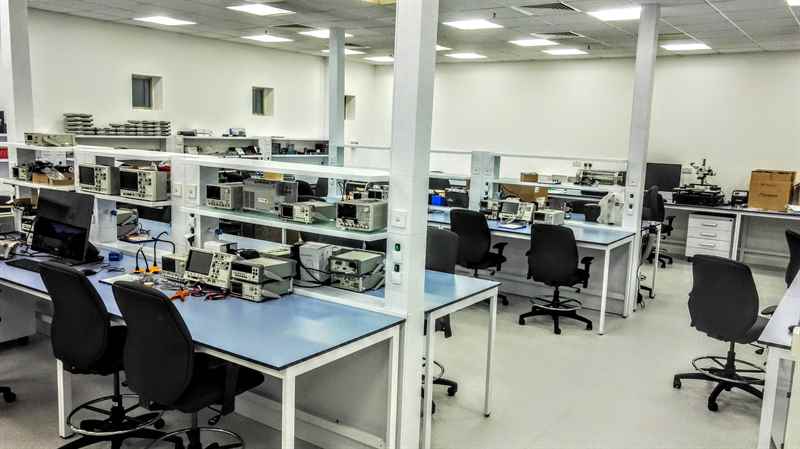
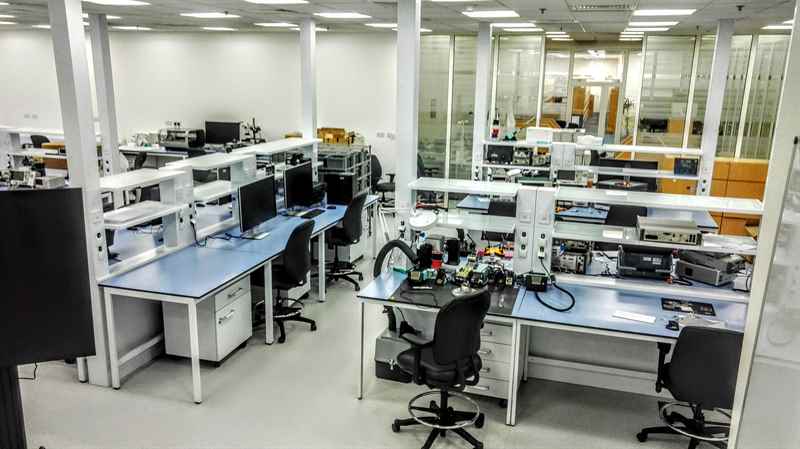
A part of my position as IoT engineer and Laboratory Manager was to set-up and is to take care of the laboratory of our (Computing Sciences) division. The current laboratory include 29 workstations. The principle manipulations and workstation themes are the following ones:

Key points

  • Soldering, Reworking and reflowing
  • PCB manufacturing with a laser CNC
  • Inkjet printing for smart wearables (conductive ink printing on diverse fabrics)
  • signal characterization (Oscilloscope, LRC, Source meter, RF analyzer, function generator, Logic analyzer, …)
  • General purpose/teaching electronic workstations
  • Visible light communication manipulation
  • Software Defined Network manipulation
  • Engineering lab part with mechanical tools
  • CNC and 3D printers
  • ...
More details

Regarding most of these workstations, manipulations and consumables we designed all the technical specifications in term of our projects needs but also in terms of safety , storage and maintenance . This helped me significantly to develop my organization skills, my human contact with the different actor involved in laboratory management and my knowledge about the state of the market for the electronic machinery and consumables. In term of my work schedule and achievement, The set-up of the lab was time consuming only for 6 months during the design and set-up of the lab in collaboration with our Facility management team, the safety team and our procurement team that leveraged the administrative work, leaving us only the essential technical work to do . For the two and half following years, I only assisted on critical issues and seldom set-up of new machinery.

  • Research & Teaching
  • Laboratory
  • Management
  • Electronic
  • Safety

7 Various Projects

HBKU, Doha, Qatar2016 - Present
Line following robot
Pump motor control
Line following robot prototype
Selenium web crawler
During my career of IoT engineer at HBKU, I participated to various projects. Thereafter is a highlight of the projects that I worked on , with a major or total contribution. 
  • Python Web Crawler
  • Controlled LED panel
  • Automated pumping system
  • Line following robot with TTL logic
  • Line following robot with Arm Microcontroller
  • Bluetooth BLE connection for remote sensors
  • Smart composter design only
More details
Python Web Crawler

For this project, I designed a web crawler used to collect the data of our ERP system, sort them and gather them into a spreadsheet. This program was mainly using Selenium, a browser controller library used to automate test but not only. The goal was to automate a repetitive task that slowed down our division work in term of material resources management. 

Controlled LED panel

In the context of sustainable energy development. A Research set up a protocol to analyze the different reaction of bacterial solution exposed to light with multiple wavelength. For this reason, we designed a rectangular panel including LEDs, controller, and microcontroller and power supply

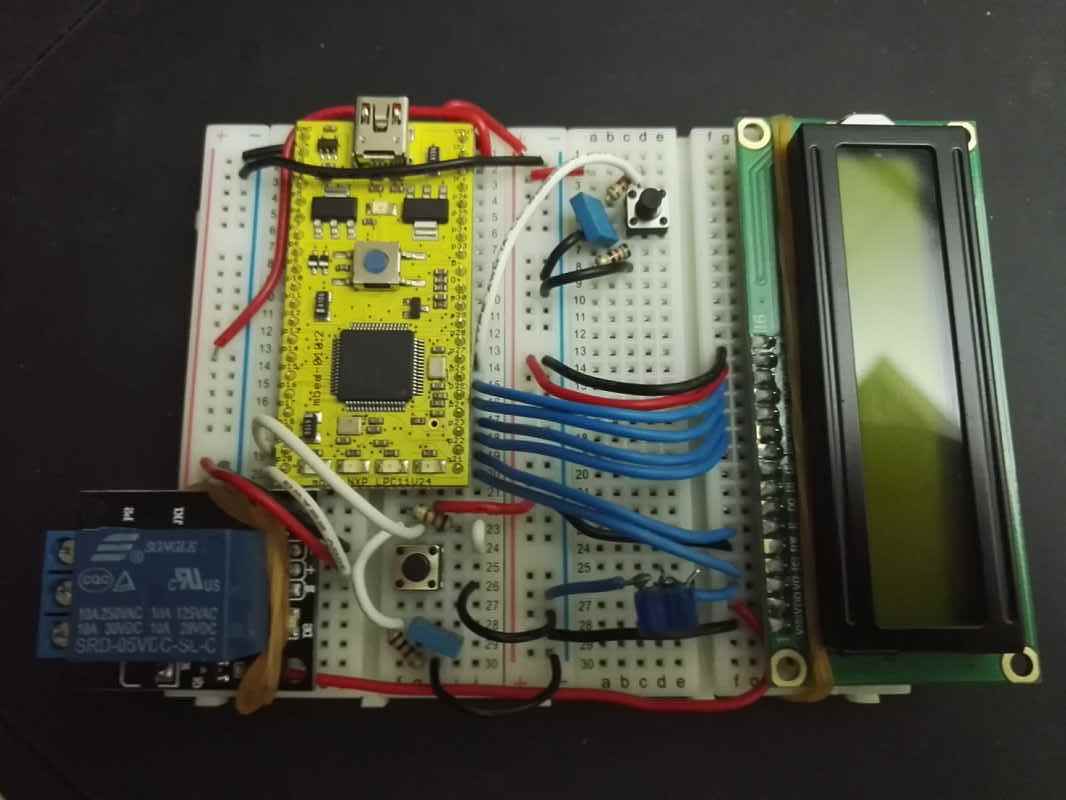
Automated pumping system

One of our college experimentation implied that solution rich in nitrate was injected at regular intervals into a larger bacterial solution. To do so, we (rapidly) developed a system controlling our pump and displaying the necessary information on a screen.

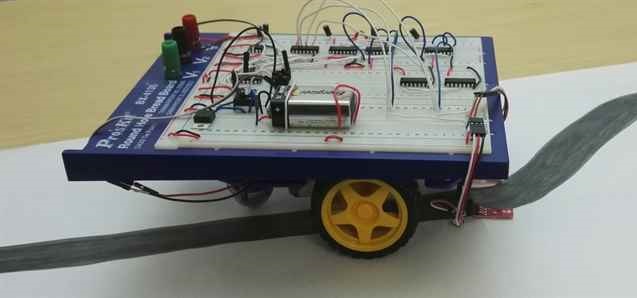
Line following robot with TTL logic

In order to introduce our undergrads students to Digital Systems and Electronic, we build a set  of lab around a line following robot. In my particular case, I designed the robot out of TTL logic components and light emitter/receiver sensor (Led and photodiode).

Line following robot with Arm Microcontroller

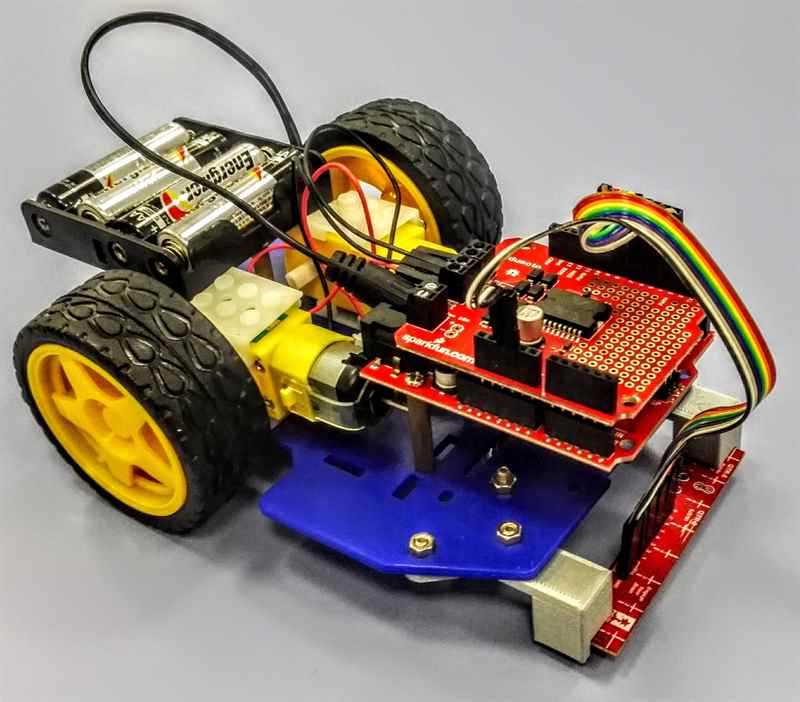
Although this project looks like the one above, I set up a race competition for high school student during our University holiday to introduce them happily to Computer Sciences. Thus I built with them around 15 line following robot, this time controlled by a Microcontroller (MCU) in order to simplify the implementation (and keep them interested). For this we used 3 different MCU technologies: STM32, and Arduino.

Bluetooth BLE connection for remote sensors and python logger

For this project a student wanted help on how to link sensors to a computer wirelessly and without much complexity. Therefore we headed to an Arduino + serial Bluetooth connection with a simple python script to log data on a computer.

Smart composter design

The goal of this project was to design a “smart composter” that would be used to monitor the degradation of alimentary product. It consisted mainly into linking sensor to a data logger, and to control the composter in term of temperature, humidity (by injecting water) and rotating a helix to move the processed food inside the composter, the student is currently implementing our solution.

  • Embedded & Firmware
  • Wireless
  • Research & Teaching
  • Rapid Prototyping
  • Python
  • TTL logic
  • Bluetooth
  • C programming

Labs for Computer Arch.

HBKU, Doha, Qatar2016 - Present
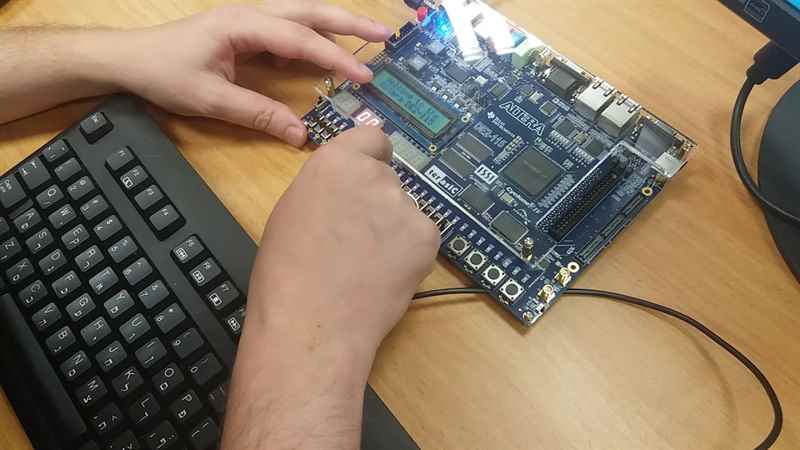
FPGA Board
Verilog logo
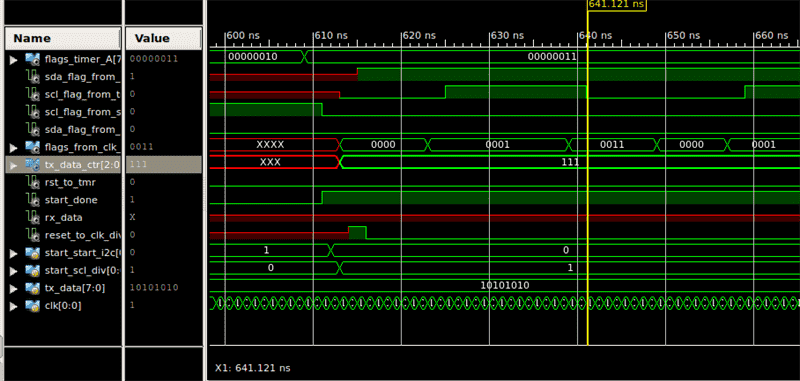
Simulink chronographs
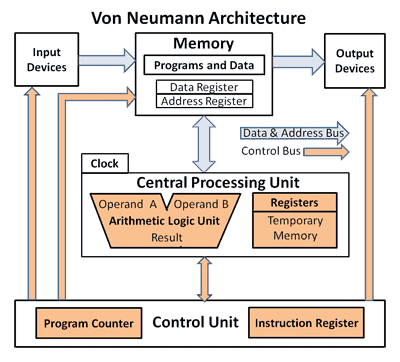
Von Neumann Architecture
Digital system design book
Microelectronics book

I wrote and taught a set of 5 laboratories exercises for graduate and PhD students of HBKU university. These labs were approaching a various set of subjects regarding Digital System Design and computer architecture , such as combinational and sequential logic, finite state machines, pipelining and optimization. This is where I realized that having all the necessary knowledge does not imply that the teaching will be successful. My first semester teaching this class taught me more than a decade of student and active life in regard to communication.

Key points:

More details

Here is the truth: the first year was not a success with this class . Even though I was perfectly skilled on the technical plan , my teaching method was to be revised. So for the coming year I spent countless of hours training my communication and teaching skills, how to approach people and motivate them to learn; with books, online classes and lots of practice . The results for the next class, were above my expectations . Students were extremely motivated and stayed late after to continue learning. Overall, this teaching experience was a success and taught me much more than technical skills.

  • FPGA & Digital
  • Research & Teaching
  • FPGA
  • Verilog
  • Block Diagrams
  • Teaching
  • Digital Design
  • Computer Architecture

FPGA Wi-Fi Link

HBKU, Doha, Qatar2016
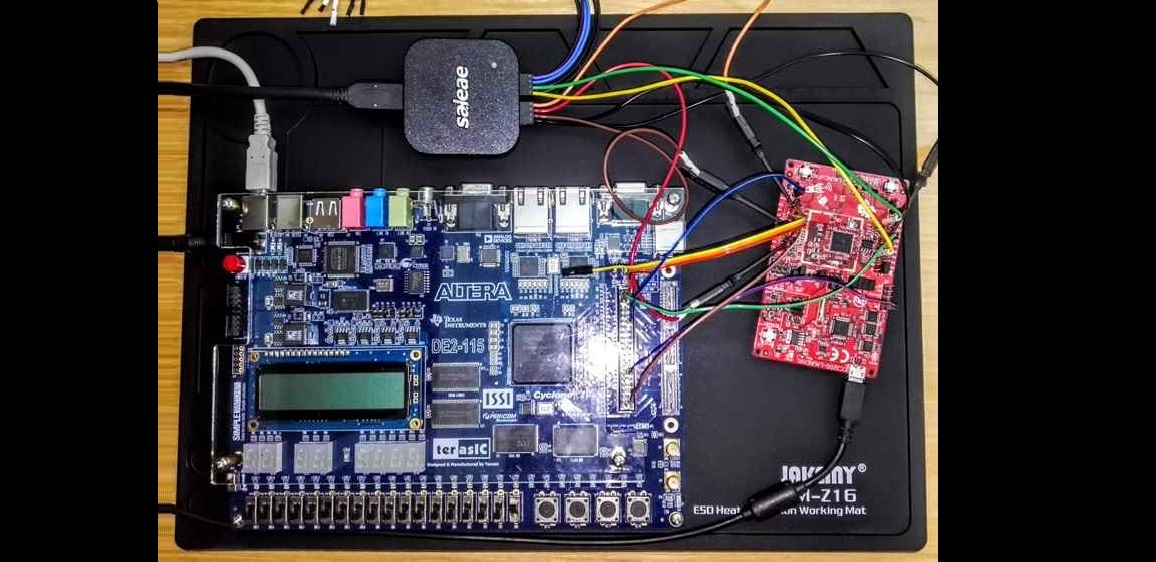
FPGA and Wi-Fi module prototype
Websocket programming
Architecture of the system

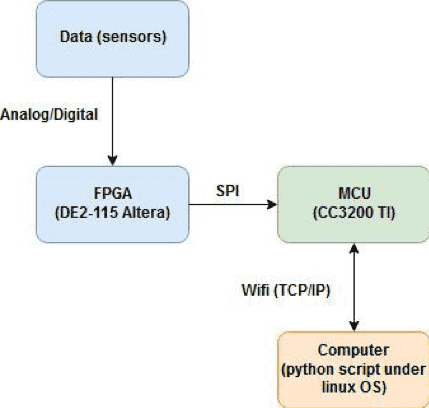
Transmission of FPGA sensor data online reliably at a high rate through a Wi-Fi connection . A FPGA with sensors is connected to a server with an TCP connection through Wi-Fi. We achieved a bandwidth of 8 Mb/sec with the help of SRAM buffering. For this project, we used development boards from Altera (now Intel) and Texas Instrument. The wireless microcontroller firmware and FPGA configuration were written in C and Verilog.

key points:

Project on GitHub

More details

This application allows for transmitting data from a FPGA to a PC or any TCP/IP capable device through WiFi via a wireless enabled MCU (CC3200 from TI), at a rate up to 8 Mbits/sec .

A FPGA receive data from several sensors, store them in memory and transmit them to a Microcontroller (MCU) through a SPI connection custom (written in verilog) .

The MCU first connect itself to an access point (WiFi) and then to a receiving server (in our case a python program we wrote ).

Afterward, the MCU starts accepting the SPI data sent from the FPGA and store them in a Buffer. Once the buffer is full enough, the MCU send data to a computer through the TCP/IP protocol.

Meanwhile, it still receives data from the SPI.

These parallel processes (SPI reception, TCP transmission) repeat endlessly as long as the (socket) connection between the MCU and the PC stays alive.

The key point of this project was to create a reliable connection between the FPGA and the MCU as the MCU often drop the connection with the remote server . Therefore the FPGA needed to wait the connection to recover and store the data into a SRAM chip placed on its board.

Once the project finalized, sources along with a comprehensive user manual were sent to the research team in need for this particular use case.

  • Embedded & Firmware
  • Wireless
  • FPGA & Digital
  • FPGA
  • Verilog
  • WiFi
  • C programming
  • Socket Programming
  • TCP

Computing Accelerators

HBKU, Doha, Qatar2016
Mandelbrot Fractal
Digital system design projects
Automaton
Mesh computing
Differential Equation

The purpose of these projects were purely educational for the need of my current position . I needed to create a set of laboratories (practical exercises) and teach Digital System Design and Computer Architecture. To reach a level I judged satisfying I set myself several goals, took few advanced classes on the subject (Cornell ECE5760). 

Subjects taken:

Project on GitHub

More details
In most of the case these projects followed these steps:
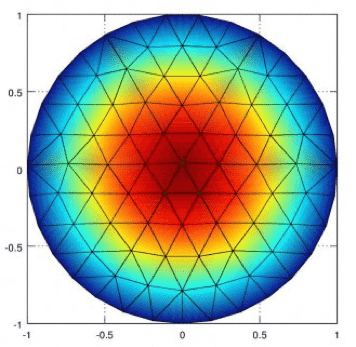
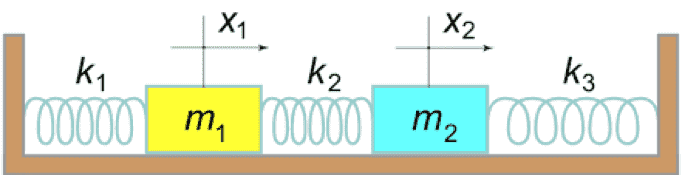
  • Study of the mathematical and physical problem on which they were based. For instance with the Sound Generator, we needed to understand how to create a mesh of hardware nodes (Finite Element Computation) communicating together and implement the PDE solver
  • Making a higher level architecture, involving Multiple Architecture Diagrams
  • Making a first implementation with Verilog
  • Simulating this implementation on a RTL Simulator, in our case ModelSim
  • Optimize the hardware in term of speed and Size
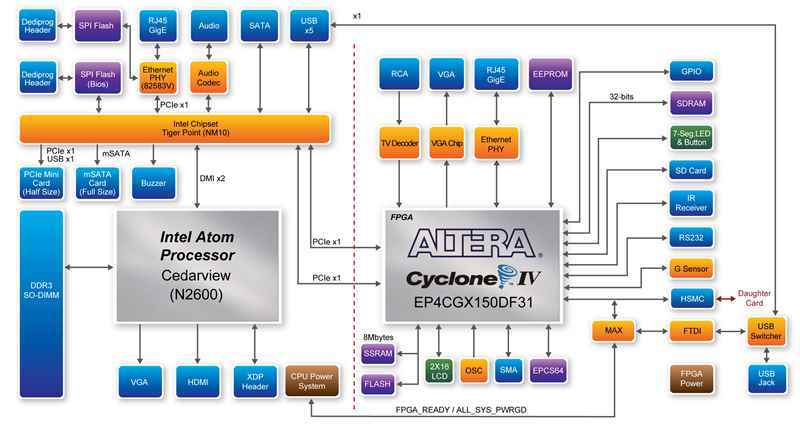
  • Implement and test it on the DE2-115 FPGA board

Code available on:  GitHub  

Overall these classes, brought me so much knowledge of Computer Architecture, Digital Design and Hardware acceleration, I cannot say thank you enough to Bruce Land, Senior Lecturer in Cornell University to make these resources available online.

  • PCB & Hardware
  • FPGA & Digital
  • FPGA
  • Hardware Acceleration
  • Highly Parallelized Systems
  • Computer Architecture

NerD

Loria research institute, Nancy, France2015
Rat with implant
Nerd PCB
Nerd PCB wireless communication
System architecture

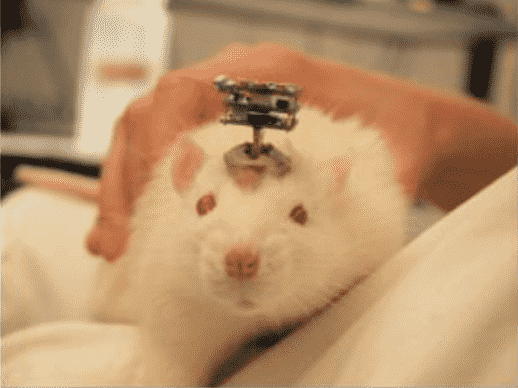
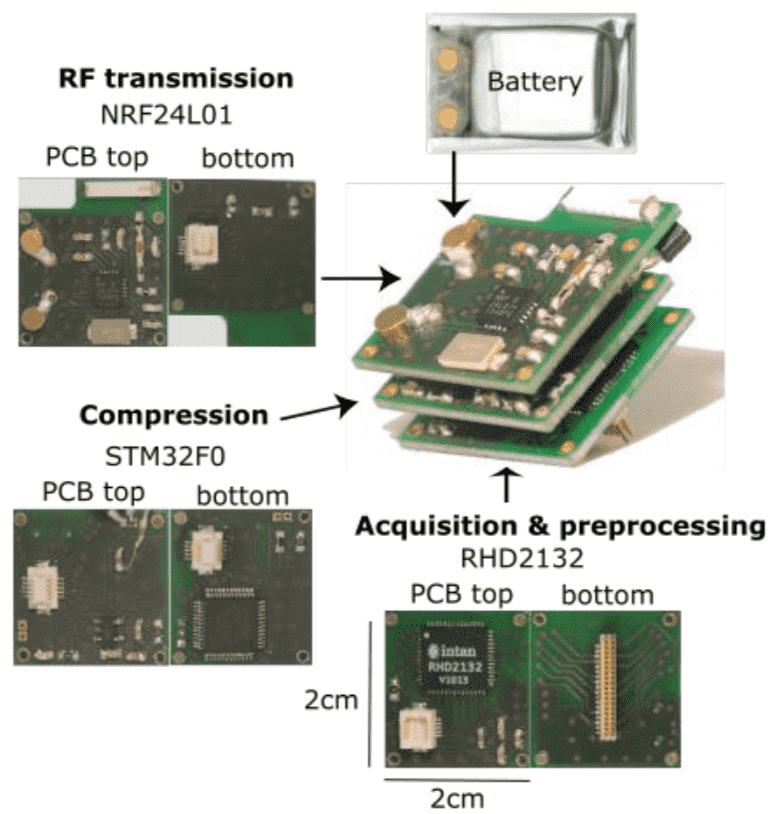
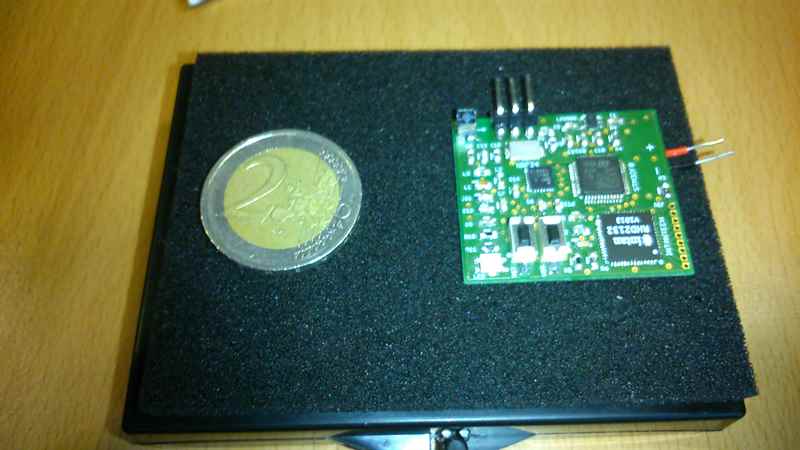
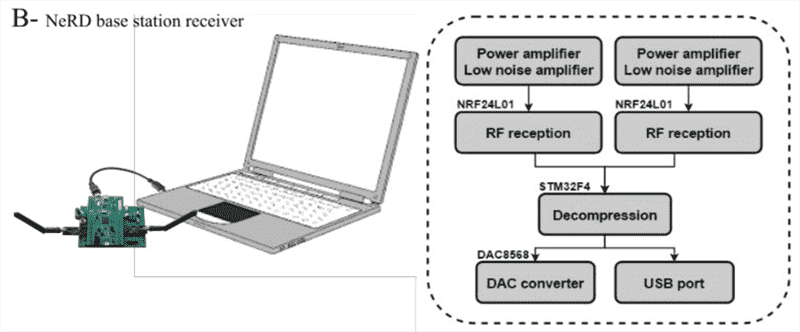
Design of a  low-cost and open source system, needed to acquire brain activity of freely moving rodents . We created a 3 stages PCB containing an acquisition/filtering chip, a wireless transceiver and a processor for application and data compression in order to sustain a high speed connection ( 1,2 Mbit/sec ) while keeping an battery life of 5 hours for long experiments. The system was wirelessly linked to a compute through a custom base station and data were displayed/stored thanks to an open source software .

Key points:

Project on GitHub

Published journal paper available on Journal of Neural Engineering  

More details
Strategy
  • Design of a wireless system for recording the neural activity of a freely moving rat
  • Design and implementation of compression algorithm, ADCPM, for the optimization of the bandwidth usage among the wireless neural signal acquisition systems
Management
  • Design and management of a workspace for the development of microelectronics systems
  • Selection of the tools and components for the development of based-microcontroller systems
  • Evaluation of the project costs, within the context of open source development, fast reproducible systems
  • The purpose is to offer a non-expensive replacement of industrial existing systems
Implementation

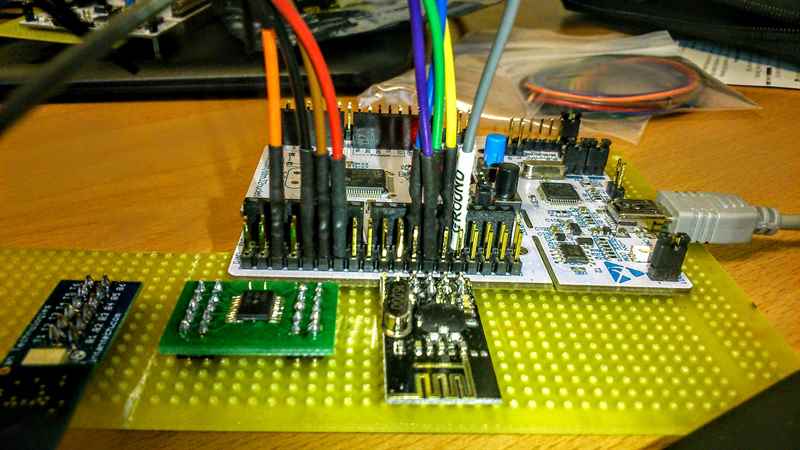
The initial part of the project was to select the appropriate Microcontroller and wireless transceiver that would reach our specifications. Thus we tests multiple wireless systems: Bluetooth, WIFI, ZigBee, analog RF, Nordic Custom; and microcontroller: Arduino, Mbed, STMicroelectronics, TI. We select the Nordic nrf24L01+ for the wireless part and a STM32F0 for the computing/peripheral unit. We then created our first proto-board, then the PCB. The following was to debug both the hardware of our 3 stages board and its firmware. After a long series of test regarding the bandwidth, transmission loss and battery life, we were ready to test it on living rodents. Once the real data were acquired, we worked on the journal article writing to finally end the project.

  • Embedded & Firmware
  • PCB & Hardware
  • Wireless
  • Research & Teaching
  • OpenSource
  • Custom Wireless
  • STM32
  • nrf24
  • PCB
  • C programming

Wireless Sensor

HBKU, Doha, Qatar2014
Wireless PCB
Moth
System prototype

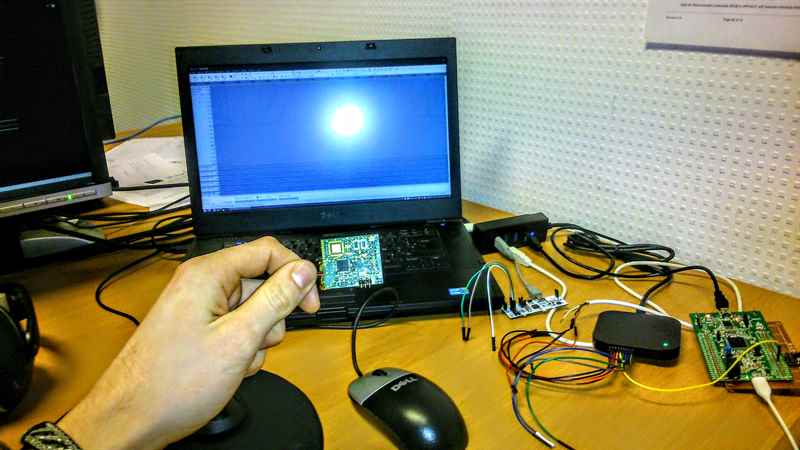
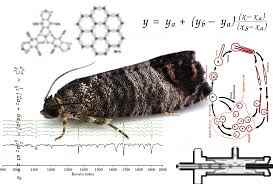
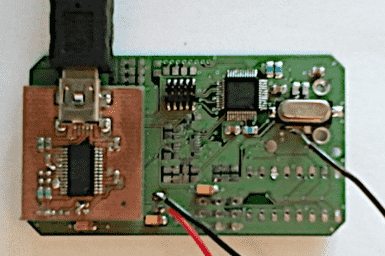
Implementation of wireless communication system for the study of flight learning process of animal such as moths. For this purpose we needed to characterizing  the electrophysiological signals in animals muscles and their response to stimulations such as the detection of a pheromone (smelling). Study of the process of learning, to further enrich the neural network based algorithms in computer science (mainly used in Artificial Intelligence ). 

Key points:

  • Bluetooth transmission system
  • GUI with Qt in C++
  • firmware written in C ( STM32 )
  • Literature review of electrophysiological acquisition systems
More details
In order to complete this project, the following objectives were to be reached


Design of an autonomous embedded system destined to be placed on a moving robot

  • The system was to be light enough to be transported by a cable robot and resist high acceleration. Therefore we reduced the mass of the Printed Circuit Board and used ultra-thin silver wires to connect the system to the animal (moth)

Acquisition of moth neuromuscular signals to be sent to a computer via Bluetooth

  • The system needed to send the electrophysiological data to a distant computer . Within our configuration, the use of cable was impossible due to the high speed of the cable robot for which the system was meant to be placed on. We selected Bluetooth technology for it reliability, speed matching our requirement, and ease of use. The microcontroller used were from STmicroelectronic and its firmware was written in C .

Design of a graphical application

  • Finally we needed to acquire and display the said data on a computer placed across the room as well as sending it data. Thus, we designed a Qt based graphical application in C++ for this purpose .
  • Embedded & Firmware
  • PCB & Hardware
  • Wireless
  • Mobile & Frontend
  • Mbed
  • Bluetooth
  • C/C++ programming
  • prototyping
  • GUI design

Heart Rate Sensor

Luleå University of Technology, Luleå, Sweden2013
Board debugging
Board Testing
Board testing

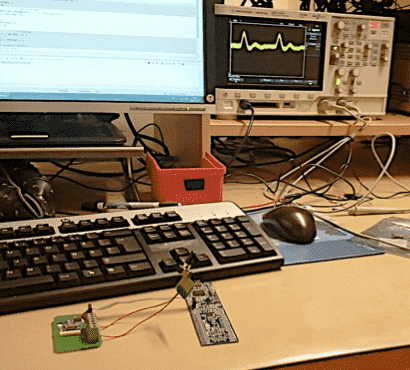
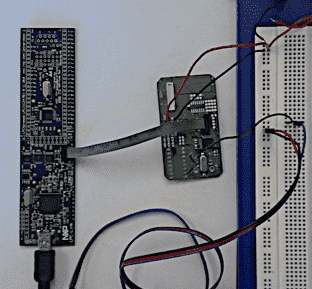
Design and implementation of  custom hardware and firmware for a Heart Rate data logger . This was a complete introduction to Printed Circuit Board (PCB) design, soldering, and firmware writing. This is also the project that made me love embedded systems.

Key points:

More details

The first challenge was to setup the goals upon what the system would do. Being used to the simplicity of Arduino, we sometimes set unattainable goals regarding embedded system, especially when looking outside of the arduino realm. In here, by the nature of our this project development tools (set by the professor), we were forced to make a comprehensive analysis of what can be done within a certain time period . Therefore the idea of heartbeat data logger came into our mind.

We firstly created a prototype thanks to several development boards. Then we wrote the firmware . After this, we designed our custom PCB and adapted the firmware. We then made the board manufactured and attempted a first soldering. After quite some hardware and software debugging, the system came to life and with it the end of this project. The satisfaction to create a system from scratch was almost overwhelming. This is at this moment that I knew I had found my path.


  • Embedded & Firmware
  • PCB & Hardware
  • NXP
  • sensor
  • UART
  • Custom PCB
  • C programming

Logarithmic Gears

ESSTIN, Nancy, France2012
Varistart system
Varistart Gear

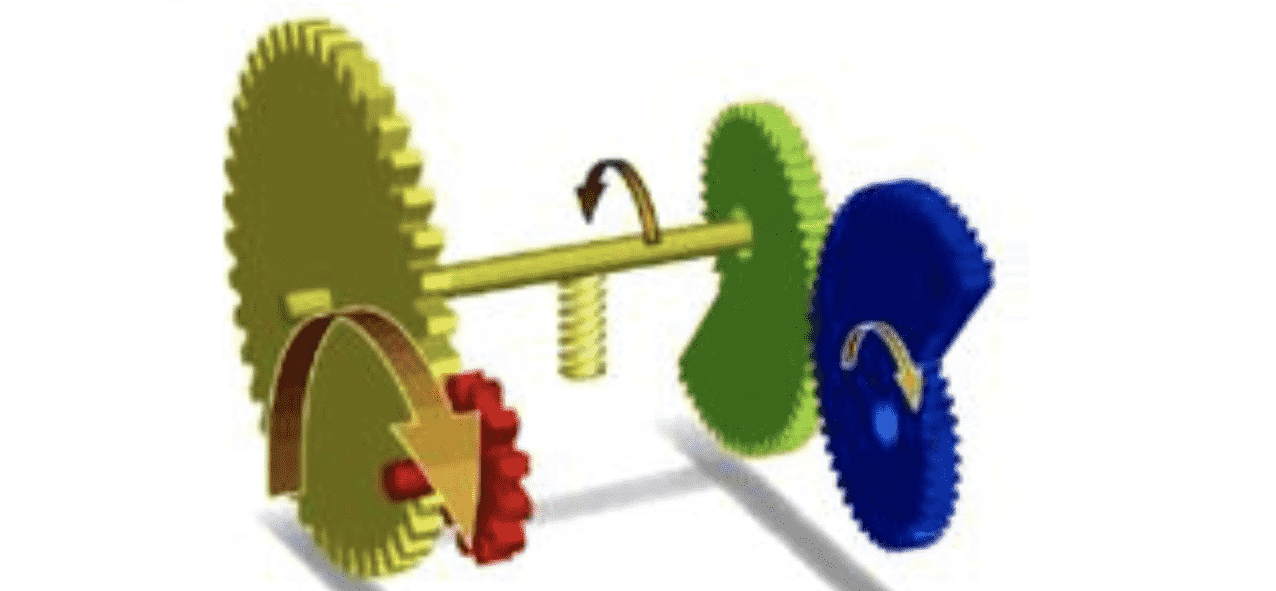
Design and implementation of a bench-test for a set of algorithmic gears . This was an industrial project within my school ESSTIN. We design a testing platform to measure the speed, torque and efficiency of the system. It was a combination of mechanical design , dynamic mechanical analysis , electronic implementation . 

Key points:

  • CAD design with Catia
  • Dynamical mechanical analysis
  • Electronic acquisition system 
More details

The purpose of this project was to design a bench test for the Varistart system.

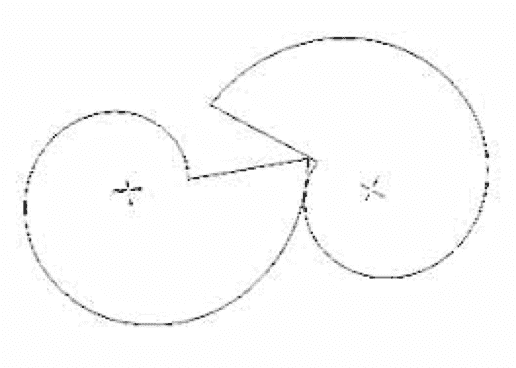
These strange gearing shapes may strike a question: How do they even rotate without breaking and what do we do with them ?

Without going too far in mechanical analytic, we can say that when the system start , the overall torque in enormous with a small speed (hence easy to rotate) and at the end of the revolution of the blue gearing (above), the torque reduces dramatically and provides a large speed (hence fast after the start). This ingeniously named system “ Varistart ” indicate that the torque vary at the start of the system.

We divided this project in 3 parts:

CAD design of the gears and the bench in which these sat

  • We proceeded to design these gearing on Catia CAD and run mechanical simulation and mechanical resistance study in order to obtain a product able to pass our specifications. 

Design of the electronic system used for data acquisition

  • We designed a Electronic system needed to acquire the position/speed/acceleration and torque of the system in order to classify its performances. For this design we used Arduino, which was my introduction to embedded systems

 Implementation/manufacture of the whole system

  • We used the heavy duty manufacturing machines available in our school to implement the system and test it

Results : We did a complete mechanical study of the performance of Varistart which were later used to design several prototypes by the IP owner of this system.

  • Research & Teaching
  • Catia
  • Arduino
  • Analytical Mechanics
  • Machining

Workflow Improvements

ESSTIN, Nancy, France2011
Heavy duty machine
Autocad design

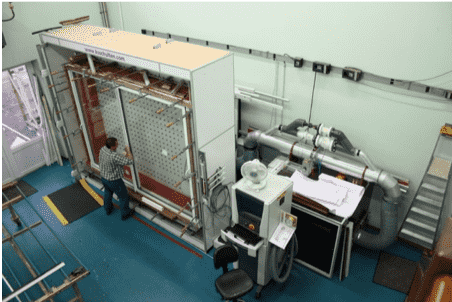
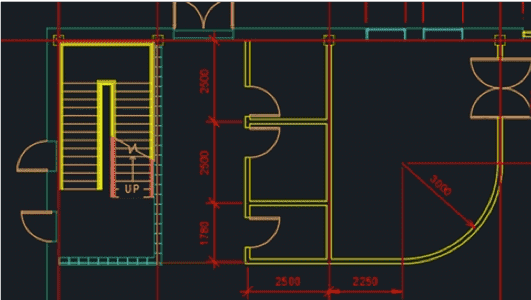
Improvement of the manufacturing line of a factory workstation . For 6 months, we conducted a medium term study and refactoring of the workflow for this particular workstation involving several heavy duty machines and 3 operators . This industrial project was a partnership between ESSTIN and Les Zelles (in France).

Key points:

  • Flow analysis of industrial process
  • 2D CAD design with Catia
More details

We divided this project into 3 parts:

Preliminary study and data acquisition

  • We first became familiar with the company, its employees and the equipment before proceeding to the data acquisition. Secondly we proceed to take physical measurement of the production chains and reported digital with AutoCAD. Then we took time measurement of the various production steps and dead times.

Data Analysis and refactoring proposal

  • The second step was to analyze the data we acquired and proceed to plan different modifications of the workspace. This involved product Flow analysis, financial analysis on the cost of the modification and its benefices. We then proposed our solution to Les Zelles.

Implementation

  • Finally we proceed to the implementation of our accepted solution with the company and reported our work to both Les Zelles and our School.

Result:  We improved the production rate by 31% (averaging the different productions with small and large series)  by refactoring the workstation, involving a gain ~2000 euros per month for the company.

  • Research & Teaching
  • Work Flow Analysis
  • AutoCAD
  • Financial analysis